

If you are sourcing optic bare fiber for FPV drone applications, you have likely encountered an urgent question: What makes G.657.A2 the gold standard for drone tethers, and why is it so hard to find?
The answer lies in a structural market shift that has transformed G.657.A2 from a specialty fiber into one of the most sought-after materials in the global supply chain. Over the past year, G.657.A2 fiber prices have surged from 32 RMB to approximately 240 RMB per core-kilometer—an increase of up to 650%. As of mid-2026, the fiber is trading at approximately **$26–33/km**, with spot prices reaching $33/km.
This article provides a professional analysis of G.657.A2 FPV drone bare fiber—covering performance, specifications, applications, pricing, and practical procurement advice from GL FIBER, a manufacturer with over 22 years of experience in optical fiber production.
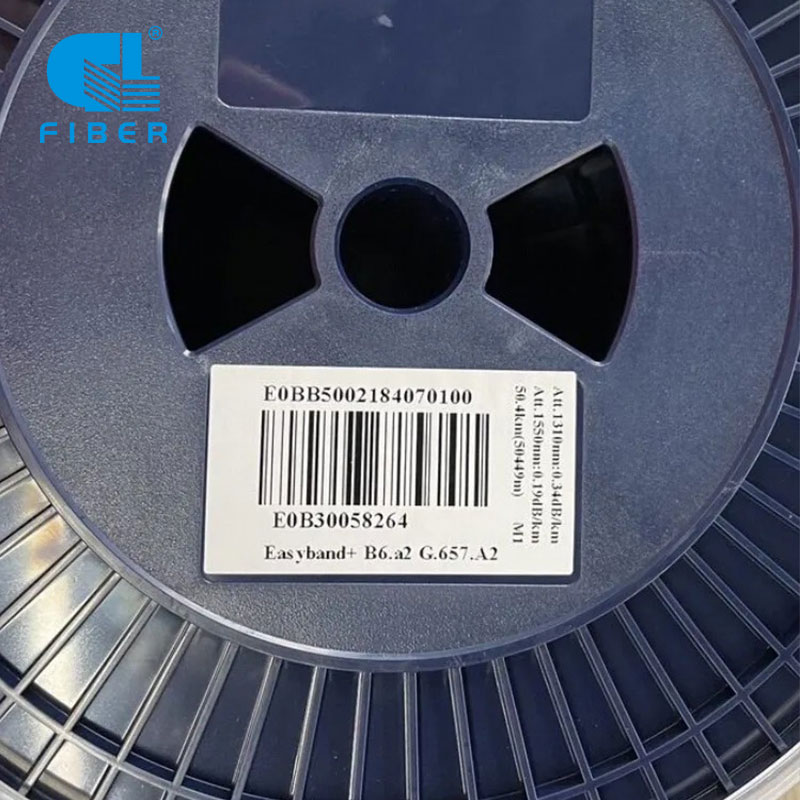
Why G.657.A2? The Bend-Insensitive Advantage?
G.657.A2 fiber is engineered for extreme bend conditions—a critical requirement for drone applications where fiber must be wound onto compact G657A2 FPV drone spools and deployed under intense mechanical stress.
Key Specifications (GL FIBER G.657.A2 Bare Fiber)
Parameter Specification
Minimum Bend Radius 7.5 mm — industry-leading bend insensitivity
Cladding Diameter 125.0 ± 0.7 μm
Coating Diameter 245 ± 10 μm (0.25mm nominal)
Attenuation @ 1310nm ≤ 0.35 dB/km
Attenuation @ 1550nm ≤ 0.21 dB/km
Attenuation @ 1625nm ≤ 0.23 dB/km
Macrobending Loss (1 turn, Φ15mm @1550nm) ≤ 0.5 dB
Macrobending Loss (10 turns, Φ30mm @1550nm) ≤ 0.03 dB
Proof Test ≥ 9.0N, ≥ 1.0%
PMD Link Design Value ≤ 0.1 ps/(km½)
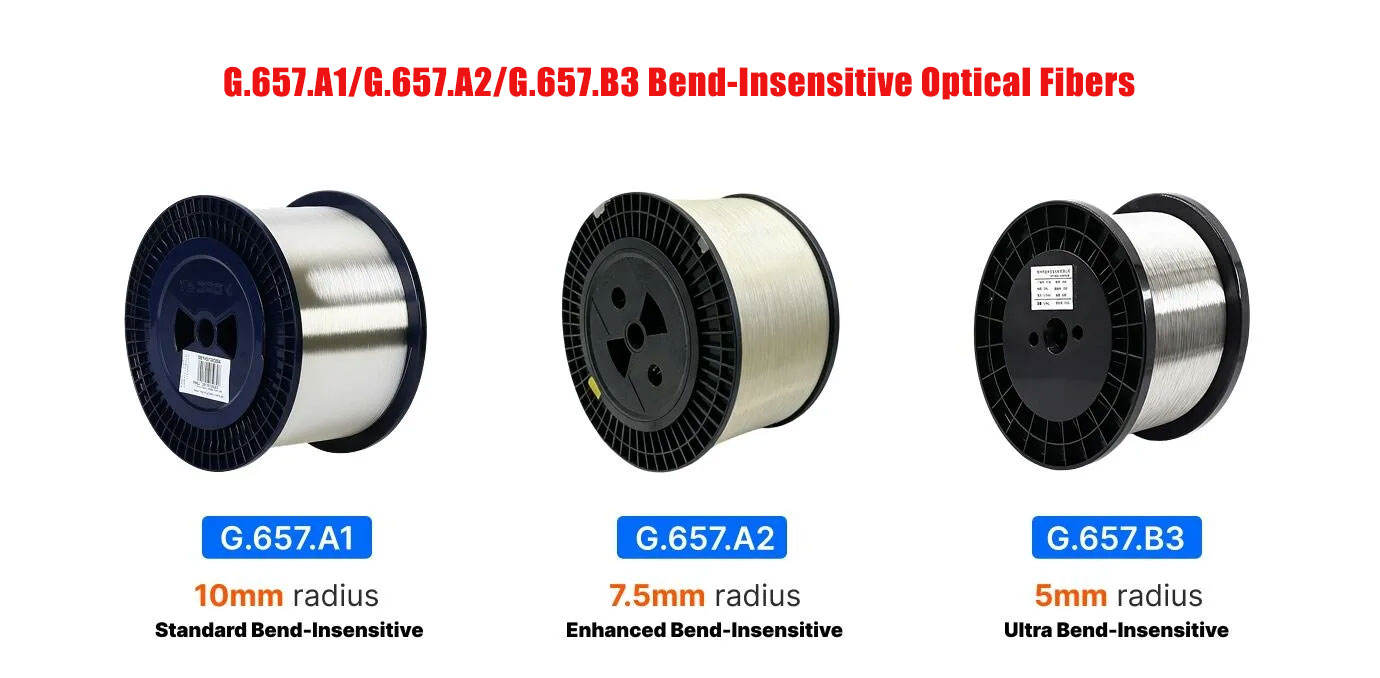
G.657.A2 vs. G.657.A1: The Critical Difference
The primary difference lies in bending capability. G.657.A1 supports a 10 mm bend radius and is considered standard bend-insensitive, while G.657.A2 supports a 7.5 mm radius and is engineered for enhanced bend-insensitive performance.
For FPV drone applications, this difference is mission-critical. A drone operating in complex environments—urban structures, dense foliage, or industrial sites—requires fiber that can withstand tight loops and aggressive maneuvers without signal degradation. G.657.A1 simply cannot deliver the same level of reliability under these conditions.
Market Demand: What's Driving the G.657.A2 Surge?
1. The FPV Drone Revolution
Fiber-optic guided drones are immune to electronic jamming, making them indispensable in modern defense applications. Each mission consumes 20–40 kilometers of specialized optical fiber—and because the fiber is never recovered, it has transformed from infrastructure into a consumable product.
Market scale:
Combined Russian and Ukrainian fiber-optic drone consumption reached 50–60 million kilometers in 2025 alone.
Russia's 2026 drone production is expected to reach 4 to 5 million units.
The fiber optic guided drones market is projected to reach approximately $2.3 billion in 2026** and grow to **$4.5 billion by 2036.
2. The AI Data Center Boom
Simultaneously, AI infrastructure is consuming fiber at an unprecedented rate. Global data center fiber demand reached 69.6 million core-km in 2025 and is projected to exceed 100 million core-km in 2026. AI-driven fiber demand is projected to grow from under 5% of the global market in 2024 to 35% by 2027.
3. The Supply Bottleneck
The root cause of the shortage lies upstream: optical fiber preforms. Expanding preform capacity takes 18–24 months and requires massive capital investment. According to industry data, the global supply-demand gap for optical fiber is estimated to reach 15% in 2026–2027—a deficit unseen in nearly a decade.
Current Pricing & GL FIBER's Offering
GL FIBER G.657.A2 Bare Optical Fiber
Price: $26/km on 50.4km spools
Available lengths: 50.4KM / 60.4KM per reel
Coating options: 200μm / 250μm / 270μm
Compliance: ITU-T G.657.A2
Market context: Industry data shows G.657.A2 prices now range from **$26–33/km**, with spot prices reaching $33/km. GL FIBER's factory-direct pricing of $26/km represents competitive value without compromising quality.
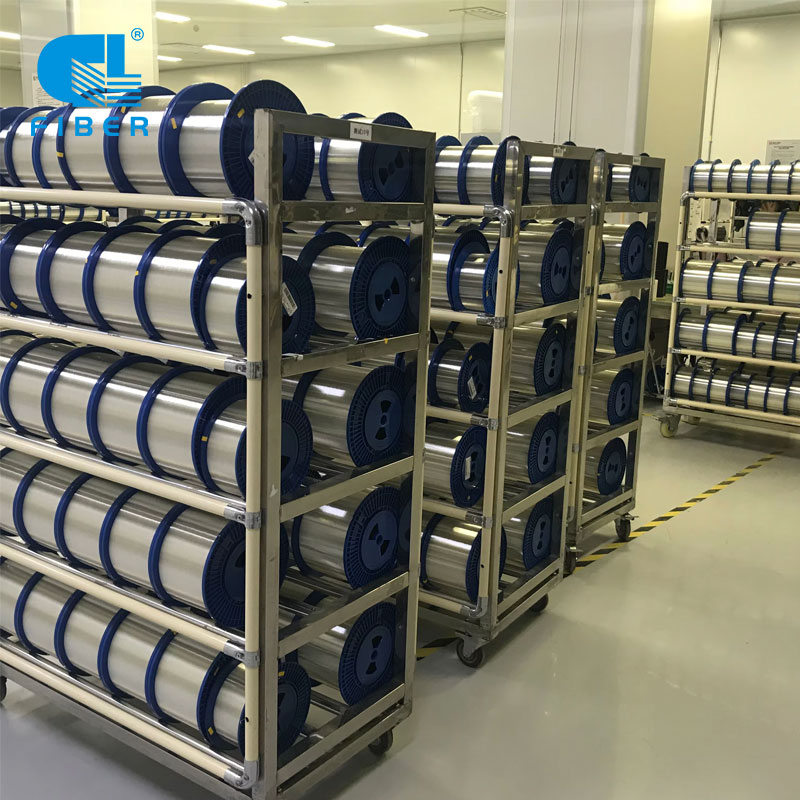
How to Identify Quality G.657.A2 Bare Fiber?
With prices soaring, the market has seen an influx of substandard or mislabeled products. Here is what to verify:
1. Demand Batch-Specific Test Reports
Genuine G.657.A2 must demonstrate macrobending loss ≤ 0.5 dB at Φ15mm (1 turn) and ≤ 0.03 dB at Φ30mm (10 turns) at 1550nm. Do not accept "typical values"—demand batch-specific data.
2. Verify ITU-T G.657.A2 Compliance
Certificates should match your shipment's batch number. G.657.A2 fibers are appropriate for a minimum design radius of 7.5 mm.
3. Inspect Physical Specifications
- Cladding Diameter: 125.0 ± 0.7 μm
- Coating Diameter: 245 ± 10 μm (0.25mm nominal)
- Proof Test: ≥ 9.0N, ≥ 1.0%
4. Watch for Red Flags
- Pricing significantly below $26/km for G.657.A2—likely A1 or substandard fiber
- "No documentation available" or refusal to provide batch-specific test reports
- Inability to arrange factory visits or video calls
- Pressure tactics with "today-only" offers
5. Partner with Source Factories
A source factory that controls its own preform and drawing capacity provides:
- Direct quality visibility — full process control from preform to finished spool
- Batch traceability — every shipment is fully documented
- Consistent quality — not reliant on third-party suppliers
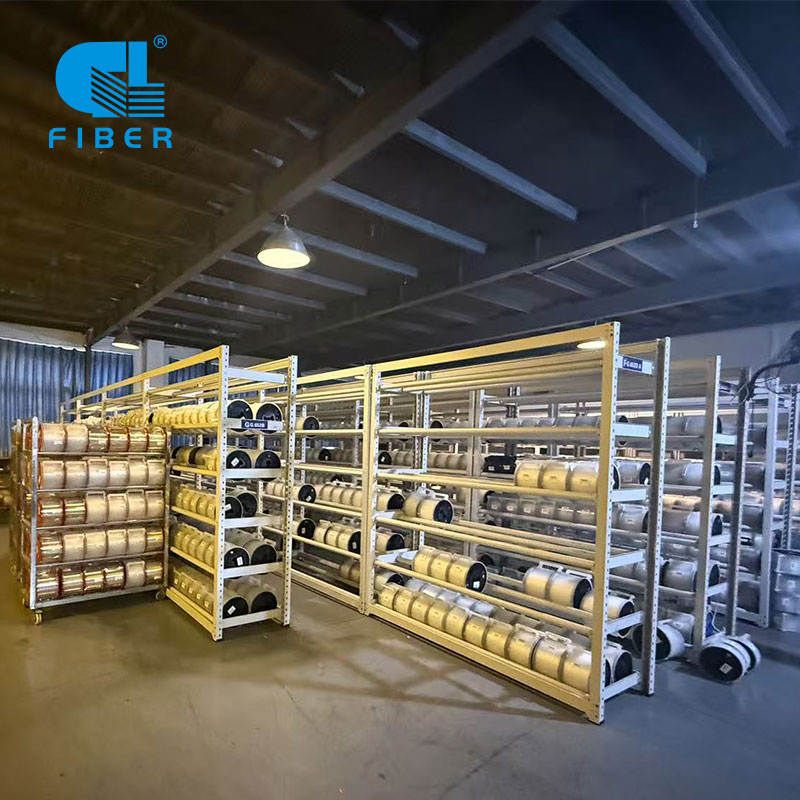
Why GL FIBER?
With 22+ years of manufacturing experience since 2004, GL FIBER is a trusted source factory for optic bare fiber and G657A2 FPV drone spool products:
- 550+ employees, 70% in technical and R&D roles
- ISO9001, ISO14001, OHSMS18001 certified
- Full process control—from preform to finished spool
- Complete transparency—factory visits and video calls always welcome
- Serving 200+ countries and regions
Conclusion
The era of cheap fiber is over. The convergence of the FPV drone revolution and AI infrastructure build-outs has created a genuine, structural supply-demand imbalance for G.657.A2 bending-insensitive fiber. With new preform capacity not expected until late 2027 at the earliest, waiting is not a viable strategy.
Whether you need optic bare fiber for drone applications, FPV drone bare fiber for defense technology projects, or G657A2 FPV drone spool products for mission-critical deployments, the time to secure your supply chain is now.