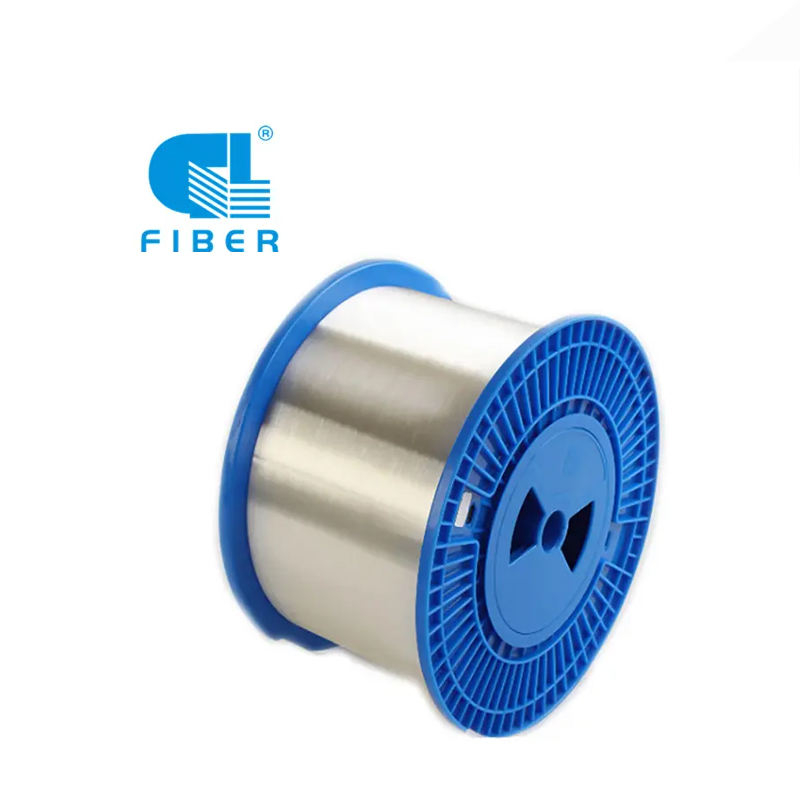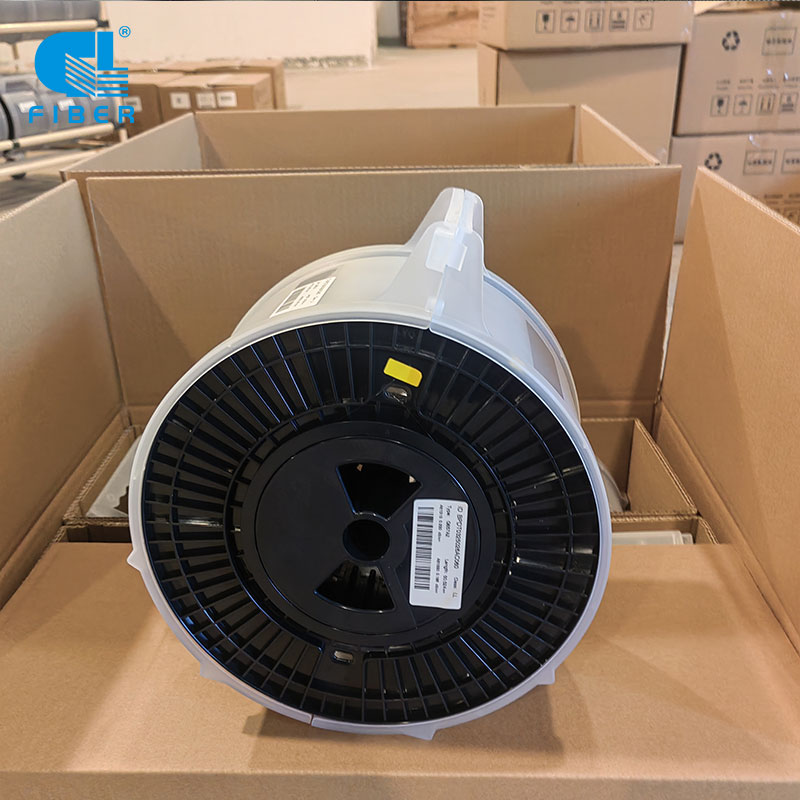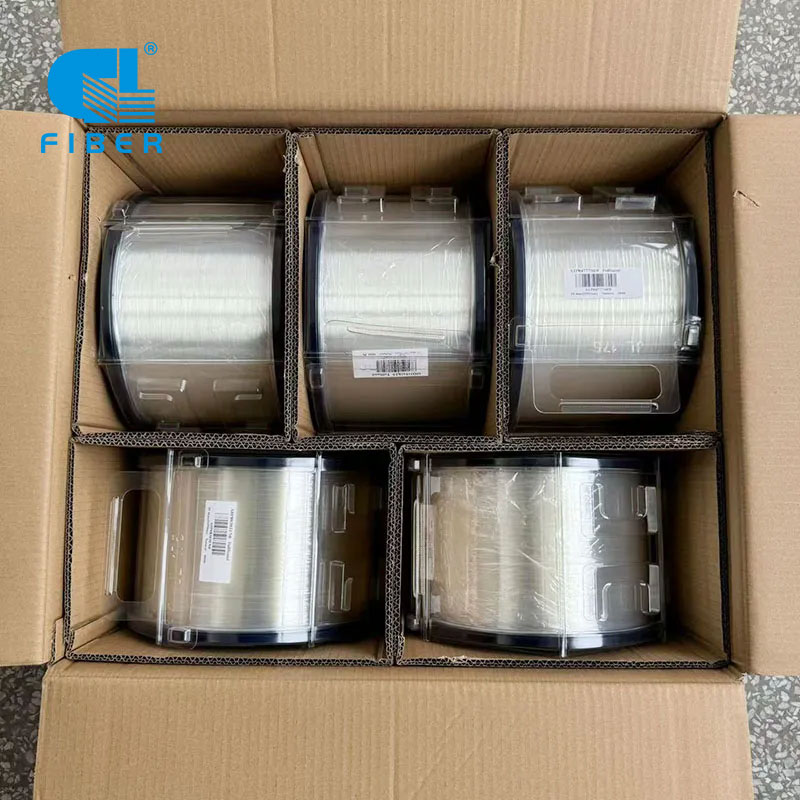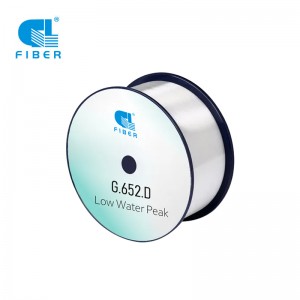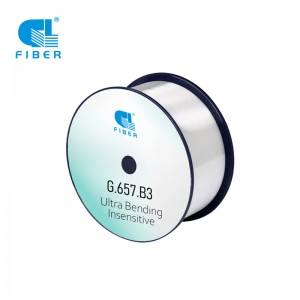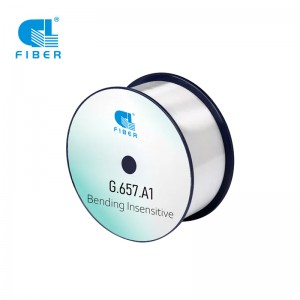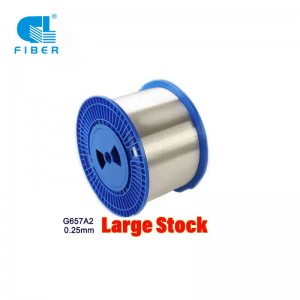
Low Loss Bending Insensitive Single-mode Fibre is suitable for optical transmission systems which operates over the entire wavelength window from 1260 nm to 1625 nm. It is an advanced product of GL FIBER bending insensitive fibre, which possesses all advantages of Low Loss Fibre, and also improves anti-bending properties, combines low loss and bending insensitive properties. GL FIBER® Low Loss Bending Insensitive Single-mode Fibre is fully compatible with standard normal single-mode Fibre, and thoroughly meets multiple demands of multi-channel, high bit-rate, long distance transmission and anti-bending properties.
Standard:
Low Loss Bending Insensitive Single-mode Fibre meets or exceeds the ITU-T Recommendation G.652.D/G.657.A1 including the IEC 60793-2-50 type B1.3/B6.a1 Optical Fibre Specification.
Main Features:
Possesses advanced anti-bending and low loss properties
Achieved the operation over full optical spectrum from 1260nm–1625nm, and increased the system transmission capacity
Lower attenuation, which meets the demand of extended long distance transmission
Good bending loss resistance at short radius bends
Accurate geometrical parameters that insure low splicing loss and high splicing efficiency
Application:
Due to its outstanding performance in both attenuation and bending resistance, GL FIBER® Low Loss Bending Insensitive Single-mode Fibre is fully compatible with different cabling and differentiated systems in different installation environments of trunk network, metropolitan area network, access network and resident network.
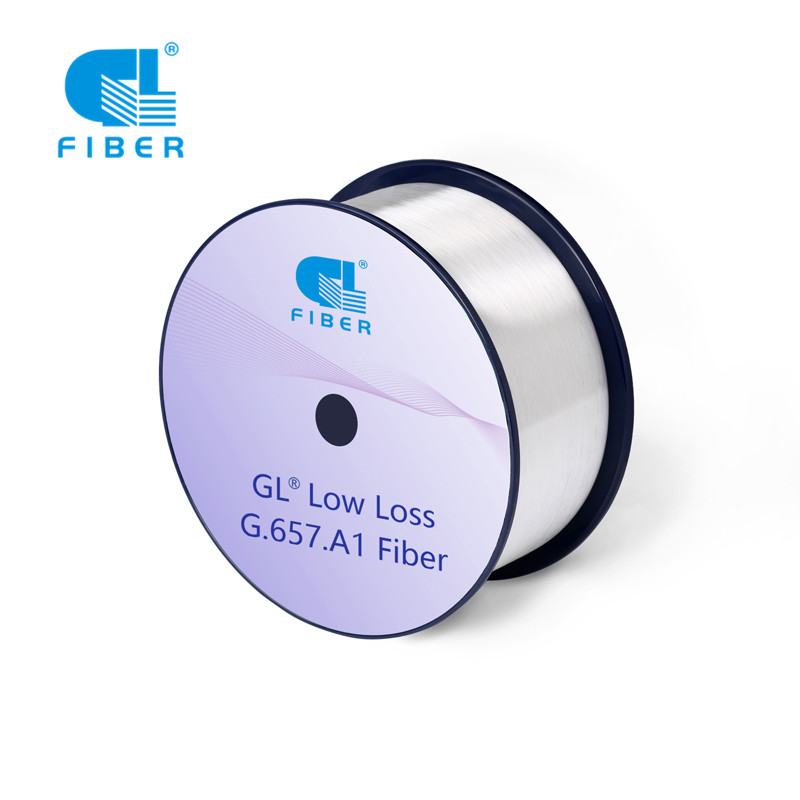
G.657.A1 Low Loss Bending Insensitive Single-mode Fibre
| Characteristics |
Conditions |
Specified values |
Units |
|
Optical Characteristics
|
| Attenuation |
1310nm |
≤0.32 |
[dB/km] |
| 1383nm(after H2-aging) |
≤0.31 |
[dB/km] |
| 1460nm |
≤0.31 |
[dB/km] |
| 1550nm |
≤0.18 |
[dB/km] |
| 1625nm |
≤0.20 |
[dB/km] |
| Attenuation vs. WavelengthMax. α difference |
1285nm-1330nm, in reference to 1310nm |
≤0.03 |
[dB/km] |
| 1525nm-1575nm, in reference to 1550nm |
≤0.02 |
[dB/km] |
| Dispersion Coefficient |
1285nm-1340nm |
-3.5 to 3.5 |
[ps/(nm·km)] |
| 1550nm |
≤18 |
[ps/(nm·km)] |
| 1625nm |
≤22 |
[ps/(nm·km)] |
| Zero Dispersion Wavelength(λ0) |
-- |
1300-1324 |
[nm] |
| Zero Dispersion Slope(S0) |
-- |
≤0.092 |
[ps/(nm2·km)] |
| Typical Value |
-- |
0.086 |
[ps/(nm2·km)] |
| PMD |
Maximum Individual Fibre |
-- |
≤0.1 |
[ps/√km] |
| Link Design Value(M=20,Q=0.01%) |
-- |
≤0.06 |
[ps/√km] |
| Typical Value |
-- |
0.04 |
[ps/√km] |
| Cable Cutoff Wavelength (λCC) |
-- |
≤1260 |
[nm] |
| Mode Field Diameter(MFD) |
1310nm |
8.7-9.5 |
[μm] |
| 1550nm |
9.8-10.8 |
[μm] |
| Effective Group Index of Refraction(Neff ) |
1310nm |
1.466 |
-- |
| 1550nm |
1.467 |
-- |
| Point Discontinuities |
1310nm |
≤0.05 |
[dB] |
| 1550nm |
≤0.05 |
[dB] |
|
Geometrical Characteristics
|
| Cladding Diameter |
-- |
125.0±0.7 |
[μm] |
| Cladding Non-Circularity |
-- |
≤0.7 |
[%] |
| Coating Diameter |
-- |
235-245 |
[μm] |
| Coating-Cladding Concentricity Error |
-- |
≤12.0 |
[μm] |
| Coating Non-Circularity |
-- |
≤6.0 |
[%] |
| Core-Cladding Concentricity Error |
-- |
≤0.5 |
[μm] |
| Curl(radius) |
-- |
≥4 |
[m] |
| Delivery Length |
-- |
Up to 50.4 |
[km/reel] |
| Environmental Characteristics |
1310nm, 1550nm & 1625nm |
| Temperature Dependence Induced Attenuation |
-60℃ to +85℃ |
≤0.05 |
[dB/km] |
| Temperature-Humidity Cycling Induced Attenuation |
-10°C to +85°C, 98% RH |
≤0.05 |
[dB/km] |
| Watersoak Dependence Induced Attenuation |
23°C, for 30 days |
≤0.05 |
[dB/km] |
| Damp Heat Dependence Induced Attenuation |
85°C and 85% RH, for 30 days |
≤0.05 |
[dB/km] |
| Dry Heat Aging |
85℃, for 30 days |
≤0.05 |
[dB/km] |
|
Mechanical Specification
|
| Proof Test |
-- |
≥9.0 |
[N] |
| -- |
≥1.0 |
[%] |
| -- |
≥100 |
[kpsi] |
| Macro-bend Induced Loss |
10 Turns Around a Mandrel of 15 mm Radius |
1550nm |
≤0.05 |
[dB] |
| 10 Turns Around a Mandrel of 15 mm Radius |
1625nm |
≤0.3 |
[dB] |
| 1 Turn Around a Mandrel of 10 mm Radius |
1550nm |
≤0.5 |
[dB] |
| 1 Turn Around a Mandrel of 10 mm Radius |
1625nm |
≤1.5 |
[dB] |
| Coating Strip Force |
typical average force |
1.5 |
[N] |
| peak force |
1.3-8.9 |
[N] |
| Dynamic Fatigue Parameter (nd) |
-- |
≥20 |
-- |

 Open Whats App