
In today's high-speed communication networks, selecting the right single mode fiber is critical for performance, reliability, and cost-efficiency. Among the various ITU-T standards, G.657.A1, G.657.A2, and G.657.B3 are the three most widely adopted bend-insensitive fibers—each designed for specific applications and installation environments.
As a 22-year manufacturer of optic bare fiber, GL FIBER provides this comprehensive comparison to help you make an informed sourcing decision.
At a Glance: Key Differences
- Parameter G.657.A1 G.657.A2 G.657.B3
- Minimum Bend Radius 10 mm 7.5 mm 5 mm
- Macrobending Loss (1550nm, 15mm radius) ≤ 0.25 dB ≤ 0.03 dB ≤ 0.15 dB
- Compatibility with G.652.D Fully compatible Fully compatible Limited compatibility
- Typical Applications FTTH, MDUs, riser cabling AI data centers, FPV drones, dense routes Ultra-tight spaces, 5mm radius environments
- Cost Premium (vs. G.652.D) ~30% ~150% ~200–220%
Deep Dive: Performance & Applications
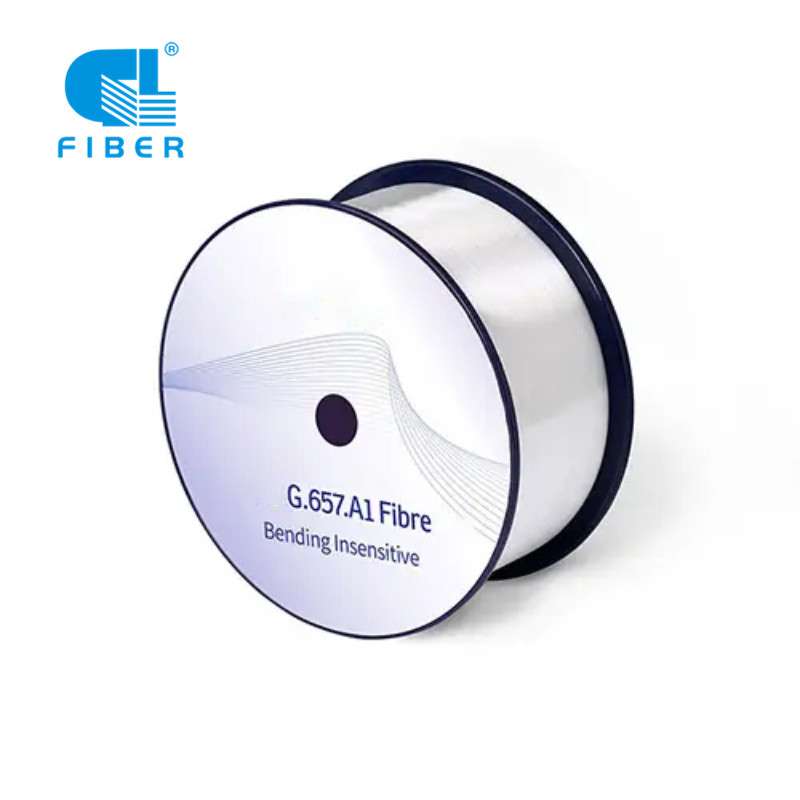
G.657.A1 Fiber: The Bend-Improved Workhorse
G.657.A1 fiber represents the first major step toward enhanced bend insensitivity while maintaining full backward compatibility with G.652.D fibers.
Key characteristics:
- Minimum bend radius of 10 mm
- Macrobending loss ≤ 0.25 dB at 1550nm (15mm radius)
- Fully compatible with existing G.652.D networks
Best suited for:
- FTTH drop cables and terminal connections
- Multi-Dwelling Unit (MDU) wiring closets
- Standard indoor and outdoor riser cabling
Why choose G.657.A1? It offers an excellent balance of performance and cost—ideal for projects without extreme bending requirements.
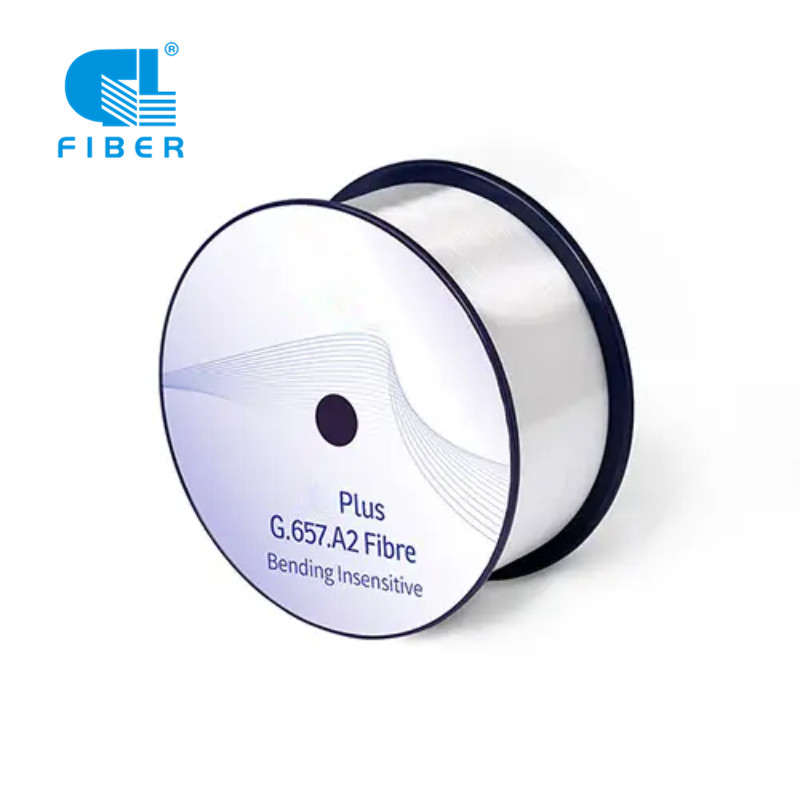
G.657.A2 Fiber: The High-Performance Specialist
G.657.A2 fiber takes bend resistance a significant step further, designed for the most challenging installation environments.
Key characteristics:
- Minimum bend radius of 7.5 mm—25% better than A1
- Macrobending loss ≤ 0.03 dB at 1550nm—approximately 88% lower loss than A1 in tight bends
- Fully compatible with G.652.D
Best suited for:
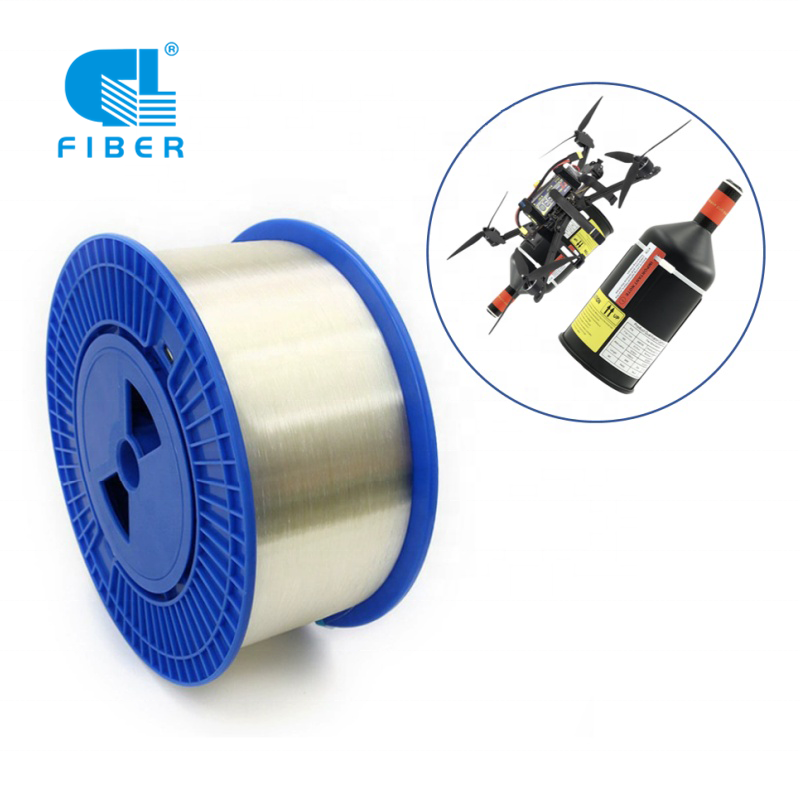
- FPV drone fiber tethers (20–40 km per mission)
- AI data centers requiring dense cabling
- Compact patch panels and tight corner installations
Why choose G.657.A2? It delivers superior performance where space is at an absolute premium.
Market Note: G.657.A2 has seen explosive demand growth—prices surged from approximately 32 RMB/km to 240 RMB/km over the past year, an increase of up to 650%. This reflects its critical role in both AI infrastructure and drone applications.
G.657.B3 Fiber: The Ultra-Bend Niche Player
G.657.B3 fiber belongs to the "B" category of the G.657 standard, engineered for extreme bend tolerance—making it the go-to choice for ultra-compact installations where space is at an absolute premium.
Key characteristics:
- Minimum bend radius of 5 mm—the smallest for any single-mode fiber
- Additional attenuation less than 0.1 dB/turn at 5mm bending radius
- Limited compatibility with G.652.D—may affect splicing
Best suited for:
- Ultra-dense data centers and smart city infrastructure
- MDU installations with extreme space constraints
- Niche applications requiring 5mm bend radius capability
Why choose G.657.B3? It delivers ultimate bend immunity for the most demanding environments. However, its limited G.652.D compatibility means it should be reserved for highly specialized projects.
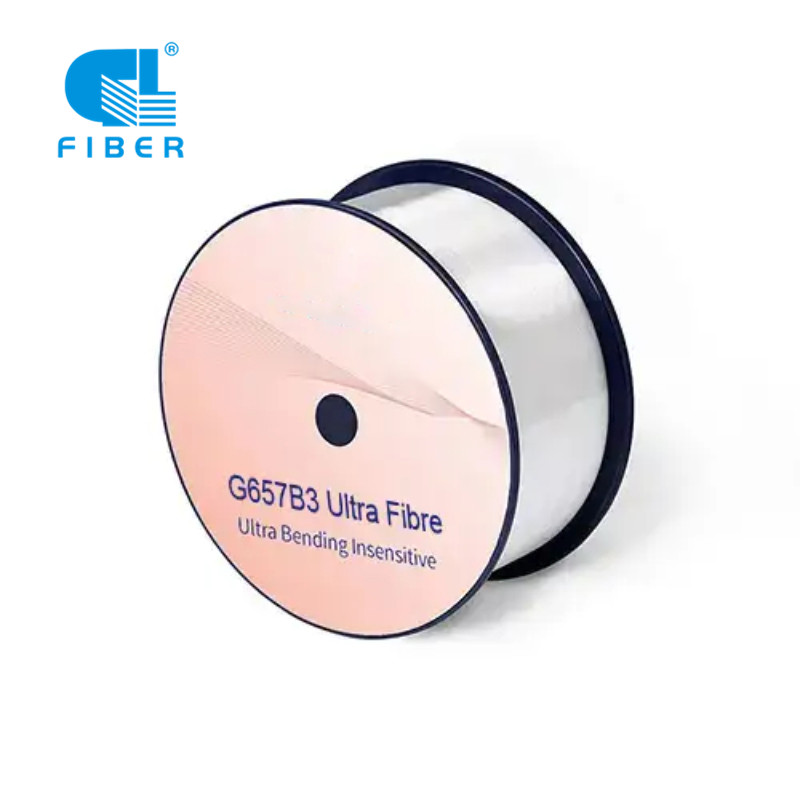
Price Note: In a recent China Telecom procurement (April 2026), G.657.B3 invisible indoor cable was priced at approximately **$71.50/km**, compared to $41/km for G.657.A2—a 74% premium for B3. B3 bare fiber currently trades at approximately $53/km.
Current Market Pricing (June 2026)
Fiber Type Price Range Key Insight
G.657.A1 $16.50–19.50/km Most cost-effective bend-insensitive option
G.657.A2 $29–33/km Premium for superior bend performance
G.657.B3 $36–53/km Highest premium—reserved for niche applications
Market Context: The entire fiber optic market has experienced unprecedented price increases. G.652.D prices surged from ~$2.60/km to $12–17/km (up to 550%), while G.657.A2 saw a 557% increase from 35 RMB/km to 210–230 RMB/km.
Procurement Advice from GL FIBER
1. Match the Fiber to Your Application
- If Your Project Requires... Choose...
- Cost-effective bend improvement, standard FTTH G.657.A1
- Extreme bend resistance, drones, AI data centers G.657.A2
- 5mm bend radius, ultra-compact spaces G.657.B3
2. Verify What You're Buying
- Critical checks when sourcing optic bare fiber:
- Demand batch-specific macrobending loss test reports—do not accept "typical values"
- Verify ITU-T compliance certificates matching your shipment's batch number
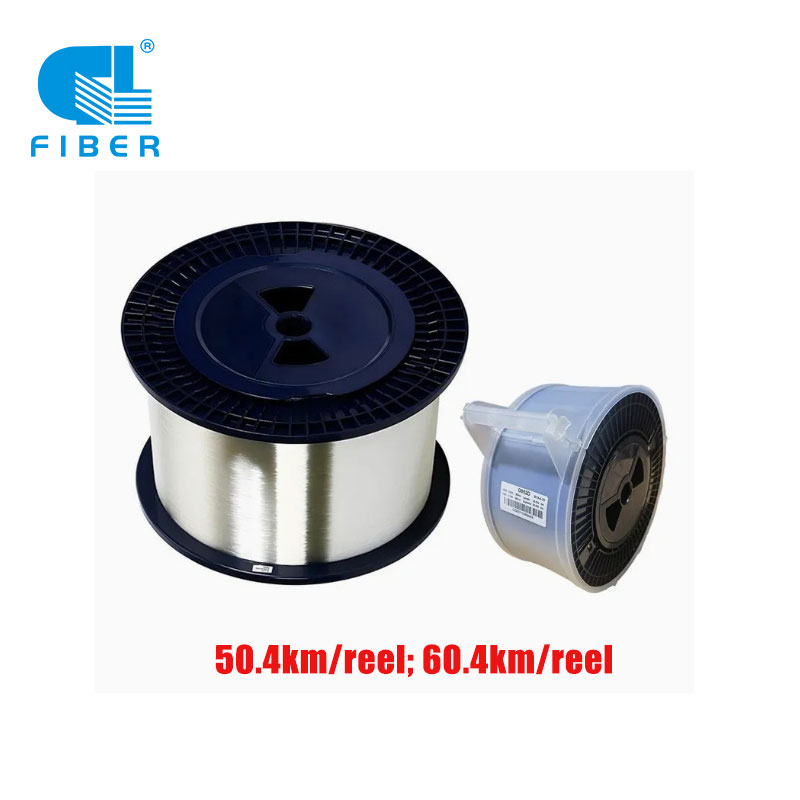
- Inspect physical spools for consistent winding, clear labeling, and proper diameter (0.25mm for drone applications)
3. Watch for Red Flags
- Unrealistic pricing—if G.657.A2 is quoted significantly below $26–33/km, it may be A1 or substandard fiber
- "No documentation available" —legitimate manufacturers provide full traceability
- 100% upfront payment demands from unknown suppliers
4. Partner with a Source Factory
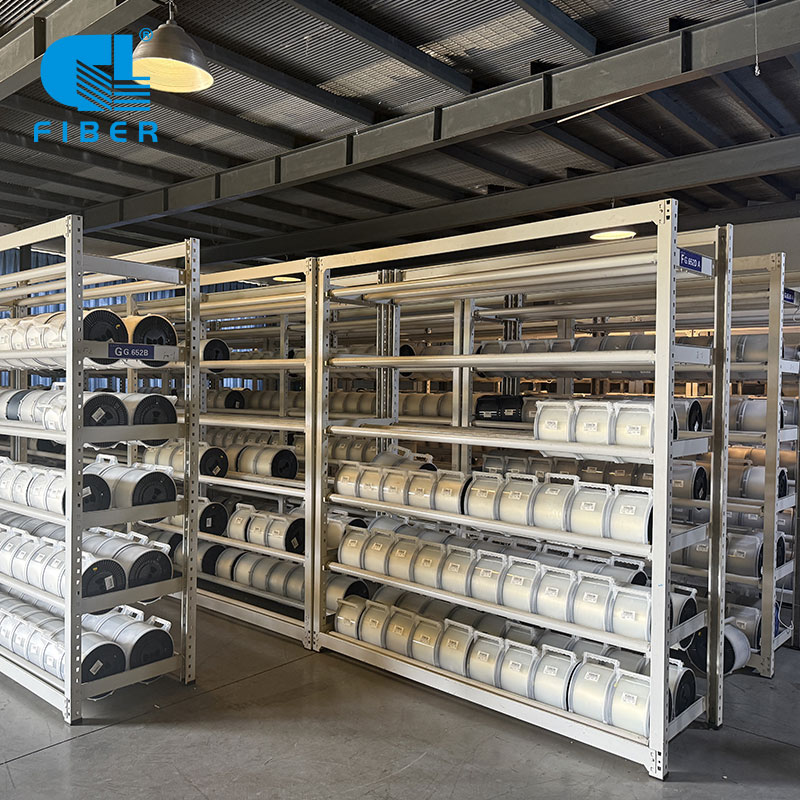
In today's supply-constrained market, working with a source factory that controls its own preform and drawing capacity provides:
- Factory-direct pricing with no middleman markups
- Direct insight into production slots and quality control
- Priority allocation for direct clients
Why GL FIBER?
- 22+ years of manufacturing experience—founded in 2004
- Source factory—full control over preform and drawing capacity
- ISO9001, ISO14001, OHSMS18001 certified
- Complete transparency—factory visits and video calls are always welcome
- Global reach—serving 200+ countries and regions
Contact GL FIBER Today
Whether you need g657a1 fiber for FTTH, g657a2 fiber for drone applications, or G657b3 fiber for ultra-tight installations, GL FIBER has the right solution for you.