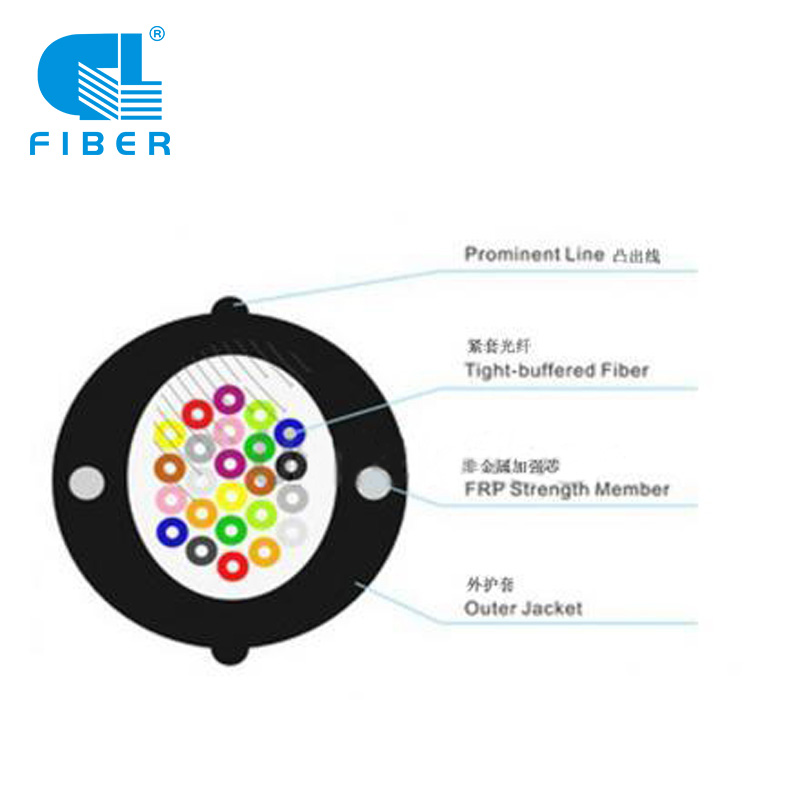
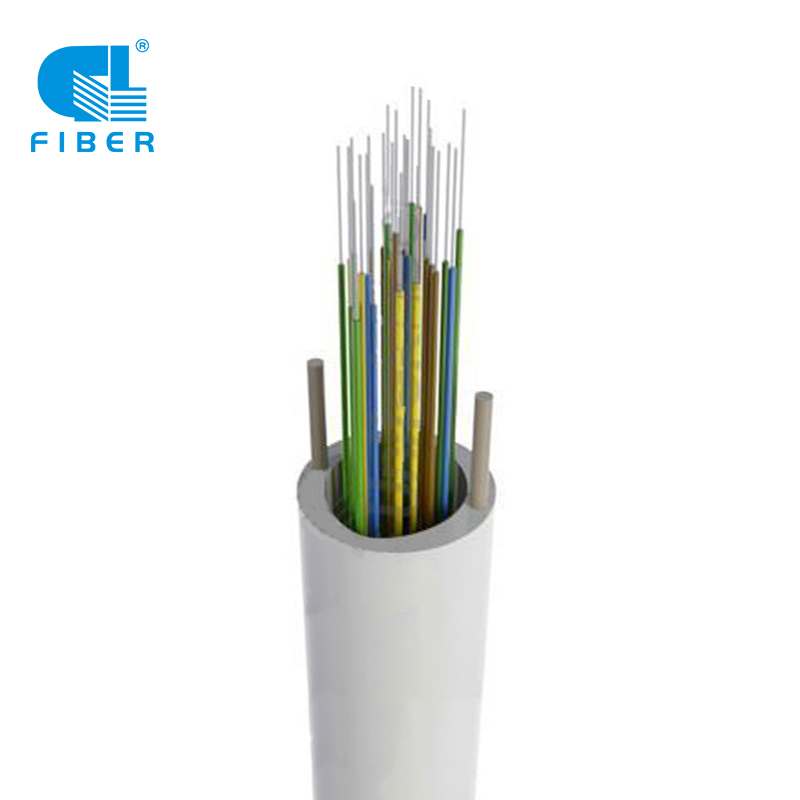
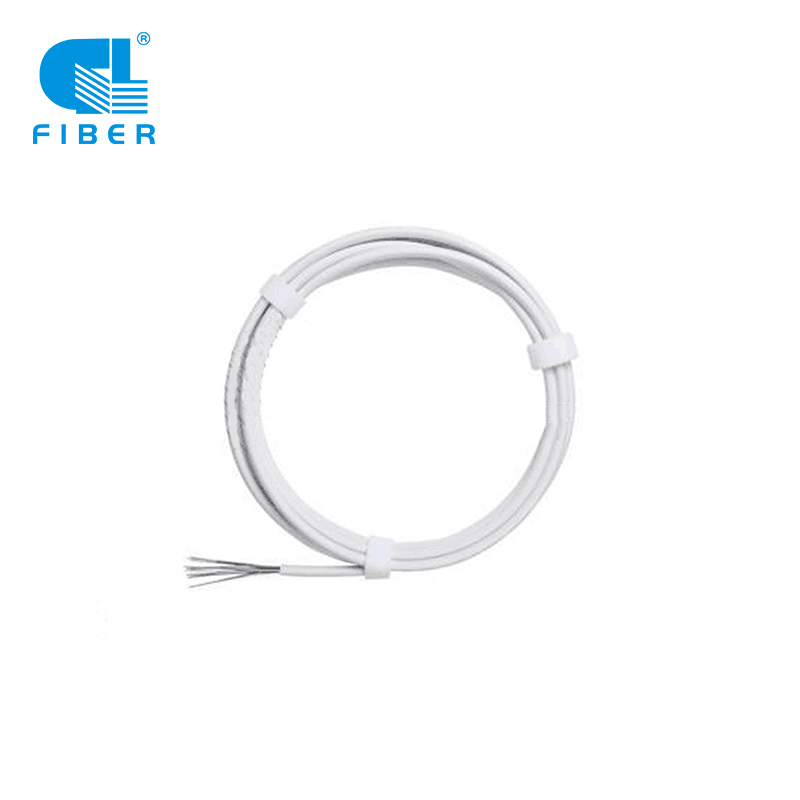
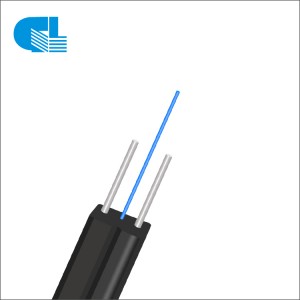
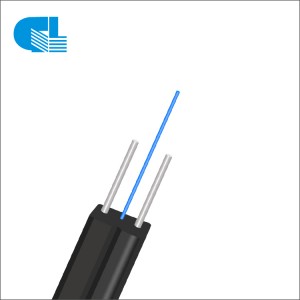
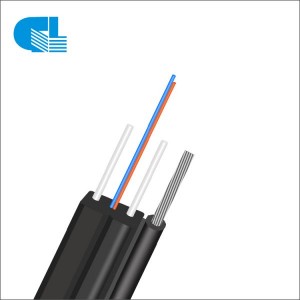
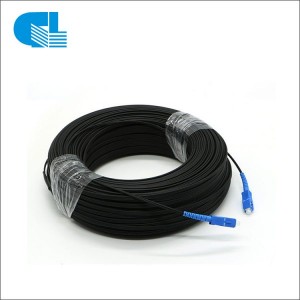
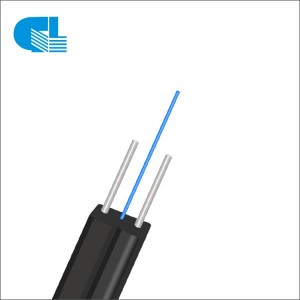
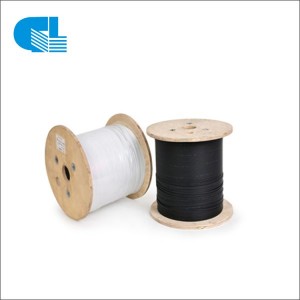
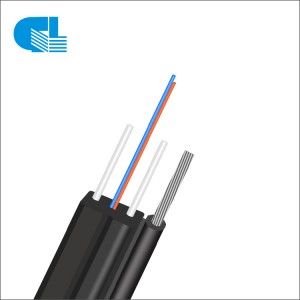
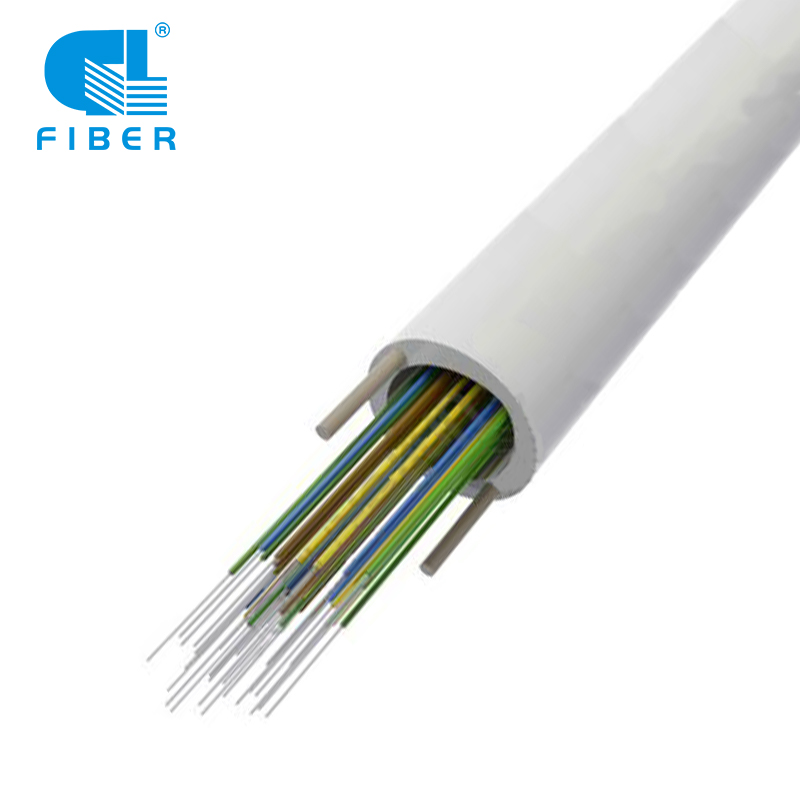
Micro Tube Indoor Outdoor Drop Fiber optic Cable is a popular fiber cable in the market. The drop fiber cable uses multiple 900um flame-retardant tight buffer fibers as optical communication medium, two parallel Fiber Reinforced Plastic (FRP) are placed at the two sides as strength member, then the cable is completed with a flame-retardant LSZH (low smoke, zero halogen, flame-retardant) jacket.
Features
- Fiber type: ITU-T- G652D, G657A fiber, G657B fiber
- It has good mechanical and environmental performance
- Flame (or not flame retardant) performance to meet the requirements of the standard
- Mechanical and physical properties of the sheath to meet the relevant standards Soft, flexible and convenient
- Good structure design, easy for branching and splicing
- Small size and light weight, easy for installation
- LSZH sheath ensuring good flame-retardant performance
- Especially applicable to vertical wiring in buildings
Application
- Used as access building cable in premises distribution system, especially used in indoor or outdoor aerial access cabling.
- Adopted to core network;
- access network, fiber to the home;
- Building to building installation
Transmission Characteristics: G657A2
| Characteristics |
Conditions |
Specified Values |
Units |
| Geometrical characteristics |
| Cladding diameter |
|
125.0±0.7 |
µm |
| Cladding non-circularity |
|
≤0.7 |
% |
| Coating diameter |
|
242±5 |
µm |
| Coating/cladding concentricity error |
<12 |
µm |
| Core/cladding concentricity error |
≤0.5 |
µm |
| Curl |
≥4 |
m |
| Optical characteristics |
| Attenuation |
1310nm |
≤0.4 |
dB/km |
| 1383nm |
≤0.4 |
dB/km |
| 1490nm |
≤0.3 |
dB/km |
| 1550nm |
≤0.3 |
dB/km |
| 1625nm |
≤0.3 |
dB/km |
Attenuation vs. Wavelength
max. A difference |
1285~1330nm |
≤0.03 |
MHz*km |
| 1525~1575nm |
≤0.02 |
MHz*km |
| Dispersion coefficient |
1550nm |
≤18 |
ps/(nm*km) |
| 1625nm |
≤22 |
ps/(nm*km) |
| Zero dispersion wavelength |
|
1304~1324 |
nm |
| Zero dispersion slope |
|
≤0.092 |
ps/(nm2*km) |
| Polarization mode dispersion |
|
|
|
| PMD maximum individual fibre |
|
≤0.1 |
ps/km1/2 |
| PMD design link value |
|
≤0.04 |
ps/km1/2 |
| Cable cut off wavelength |
|
≤1260 |
nm |
| Mode field diameter |
1310nm |
8.8~9.6 |
µm |
| 1550nm |
9.9~10.9 |
µm |
| Group index of refraction |
1310nm |
1.4691 |
|
| 1550nm |
1.4696 |
|
| Environmental characteristics |
1310nm、1550nm&1625nm |
|
| Temperature cycling |
-60℃ to +85℃ |
≤0.05 |
dB/km |
| Temperature-humidity cycling |
-10℃ to +85℃4% to 98% RH |
≤0.05 |
dB/km |
| Water immersion |
23℃, 30 days |
≤0.05 |
dB/km |
| Dry heat |
85℃, 30 days |
≤0.05 |
dB/km |
| Damp heat |
85℃, 85%RH, 30 days |
≤0.05 |
dB/km |
| Mechanical specification |
| Proof test |
≥100 |
kpsi |
| Macro bending induced loss |
|
|
|
| 1Turns @10mm Radius |
1550nm |
≤0.5 |
dB |
| 1Turns @10mm Radius |
1625nm |
≤1.5 |
dB |
| 10Turns @15mm Radius |
1550nm |
≤0.05 |
dB |
| 10Turns @15mm Radius |
1625nm |
≤0.30 |
dB |
| 100Turns @25mm Radius |
1310&1550&1625 nm |
≤0.01 |
dB |
| Dynamic stress corrosion susceptibility parameter |
20 |
|

 Open Whats App