

If you are sourcing G657A2 bare optical fiber for UAV FPV drone tethers or specialty single-mode fiber applications, you have likely noticed a dramatic shift in the Chinese market. Lead times have stretched from weeks to months. Quotes from factories are valid for days, not weeks. Some suppliers now require deposits simply to hold production capacity . The question on every buyer’s mind is straightforward: what is really driving the G657A2 fiber price, and how should procurement teams respond?
This article breaks down the data behind the shortage, the actual price trends in China, and practical sourcing guidance for buyers of 0.25mm fiber and related G657A2 bare optical fiber products.
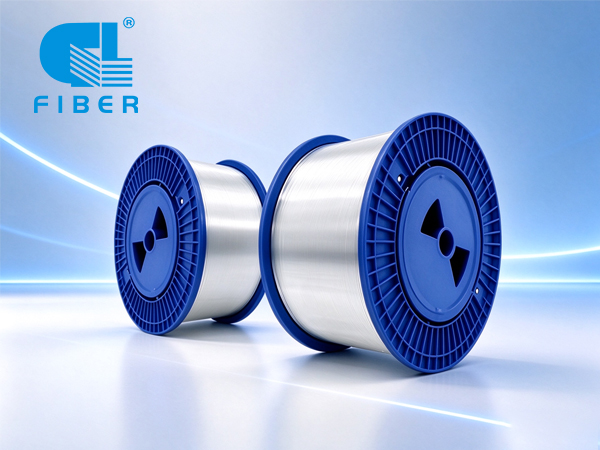
The Shortage Is Real: What the Data Shows
The G657A2 fiber market in China has moved from a buyer’s market to a seller’s market within roughly eighteen months. Industry reports and corporate disclosures point to a price trajectory that is difficult to ignore.
According to multiple industry sources, G657A2 fiber pricing moved from approximately 32 RMB per core-kilometer in early 2025 to around 240 RMB per core-kilometer by late 2026—an increase of roughly 650% . For drone-grade 0.25mm G657A2 bare fiber on spools, current market quotes range from 240–260 RMB per core-kilometer, with availability described as “allocation-based” rather than open market .
The supply gap is not marginal. For G657-class fibers specifically, 2026 global demand is estimated at 370 million core-kilometers, while China’s effective capacity for these grades is only 200–210 million core-kilometers—a gap of approximately 46% . This is not a temporary logistics issue. It is a structural imbalance between demand and the physical capacity to produce preform, the upstream material from which all optical fiber is drawn.
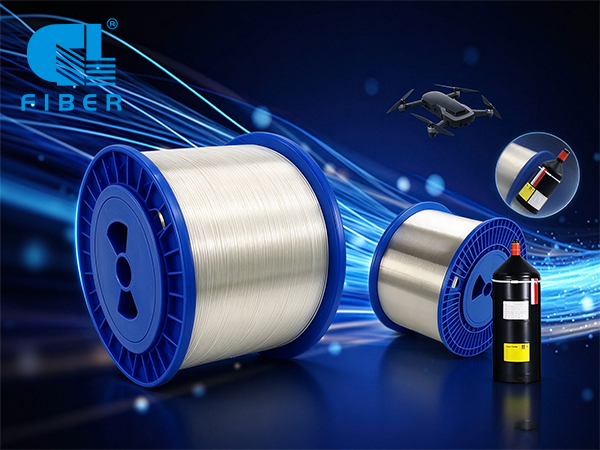
Why G657A2 Is “in critically short supply”?: The Two Demand Shocks
Shock One: AI Data Centers Are Absorbing Bend-Insensitive Fiber
The first demand shock comes from AI data centers. Inside GPU clusters, high-density cabling requires fiber that can bend tightly without signal loss. G657A2 is designed precisely for this: minimum bend radius of 7.5mm, low macrobending loss, and full compatibility with standard single-mode fiber . As AI training clusters scale, data center fiber demand has surged. Global data center fiber demand reached 69.6 million core-kilometers in 2025, up 75.9% year-over-year, and is projected to exceed 100 million core-kilometers in 2026 .
Crucially, the same bend-insensitive properties that make G657A2 ideal for tight routing inside GPU racks also make it the fiber of choice for drone tethers. When data center demand exploded, it began pulling supply away from every other application .
Shock Two: FPV Drones Consume Fiber as a One-Time Expendable
The second shock is specific to the UAV FPV sector—and it is arguably the more aggressive driver for 0.25mm fiber demand. A typical fiber-optic FPV drone deploys 10 to 40 kilometers of fiber during a single mission, and that fiber is not recovered. It is a consumable .
Projections for drone production illustrate the scale. Russia alone is estimated to produce 4 to 5 million drones in 2026, each requiring kilometers of G657A2 fiber . This demand category did not exist at meaningful scale two years ago. It arrived suddenly, and it targets precisely the same product grade—0.25mm or 0.27mm G657A2 bare optical fiber on spools—that data centers are also scrambling to secure.
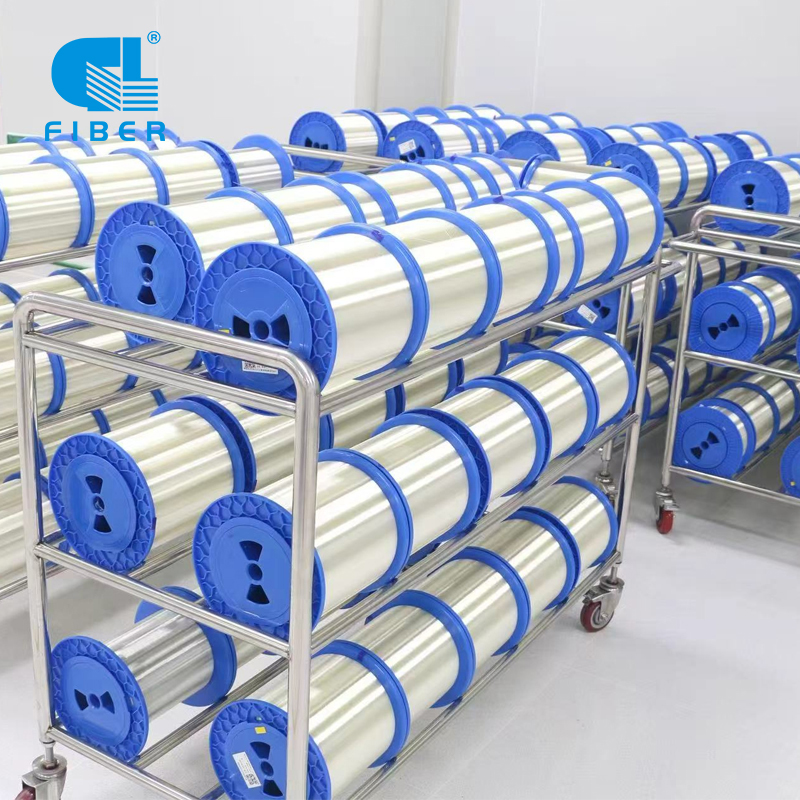
Why Supply Cannot Catch Up Quickly?
The bottleneck sits upstream at the optical fiber preform stage. Preform accounts for roughly 70% of the fiber industry’s profit and carries the highest technical barriers. Building a new preform facility with 3,500-ton capacity requires approximately 4 billion RMB and a construction timeline of 18 to 24 months . This means that even if every major manufacturer broke ground on new preform plants today, meaningful additional supply would not reach the market until late 2027 or 2028.
Meanwhile, manufacturers are allocating scarce preform to the highest-value products. G657A2 preform now commands a significant premium, and producers have shifted 30% to 40% of their capacity toward specialty fibers like G657A2 . But no amount of prioritization can close a 46% gap. As of late 2026, China’s effective preform capacity utilization rate stood at 84.3%, with North American facilities exceeding 95% . There is very little slack left in the system.
What Buyers Should Expect to Pay (and How to Buy Well)?
Current Price Reality
For 0.25mm G657A2 bare optical fiber intended for UAV FPV drone tethers, the market has repriced dramatically. Buyers should expect quotes in the range of 240–260 RMB per core-kilometer for standard drone-grade material, with availability dependent on allocation rather than open spot purchase . Quotes are often valid for only a few days, and purchase orders without deposits carry little weight in the allocation queue .
Industry forecasts suggest the global fiber supply-demand gap may widen further in 2027. While new capacity will begin to alleviate the shortage after 2028, G657A2 specifically is not expected to see meaningful relief until 2029 or later .
Practical Procurement Guidance
1. Do not treat fiber as a spot commodity. In the current environment, waiting until you need the fiber means paying whatever the spot market demands—or finding no allocation at all. If you have a confirmed production schedule for the next two to three quarters, negotiate a capacity reservation agreement now. A deposit-backed reservation is increasingly the only way to secure reliable supply .
2. Verify the fiber is genuinely G657A2, not a substitute. The price premium for G657A2 has created an incentive for mislabeling. Request the full optical test report for each spool, with particular attention to macrobending loss at 1550nm and 1625nm and PMD values. A genuine G657A2 should show 1 turn around a 15mm radius at ≤0.5 dB and ≤1 dB respectively, and PMD link design value ≤0.1 ps/√km . If the supplier cannot provide traceable test data, the price advantage is illusory.
3. Match the diameter to your application, not to availability. For FPV drone tethers, 0.25mm is the common specification because it balances tensile strength, handling characteristics, and weight. If a supplier pushes 0.20mm or 0.27mm as a “close enough” substitute, confirm that the coating diameter and mechanical performance meet your spooling and deployment requirements. The fiber’s proof test should be ≥9.0N and coating strip force within the specified range .
4. Build relationships with manufacturers that control preform supply. In a shortage, allocation favors buyers who are known to the factory, not buyers who appear only when the market is tight. GL FIBER’s G657A2 bare optical fiber spools are produced with full traceability and tested against ITU-T G.657.A2 specifications, with attenuation at 1310nm ≤0.35 dB/km and at 1550nm ≤0.21 dB/km . For FPV drone applications requiring 1km to 50km spool lengths, working directly with a manufacturer that understands the UAV tether application is more valuable than chasing the lowest quoted price.
5. Budget for higher prices through 2027. The supply-demand gap is not closing quickly. Buyers who build procurement plans around 2025 pricing will find themselves unable to secure allocation. A realistic budget should assume G657A2 pricing remains in the 220–260 RMB per core-kilometer range through 2027, with downside risk only after new preform capacity begins to come online in 2028 and beyond .
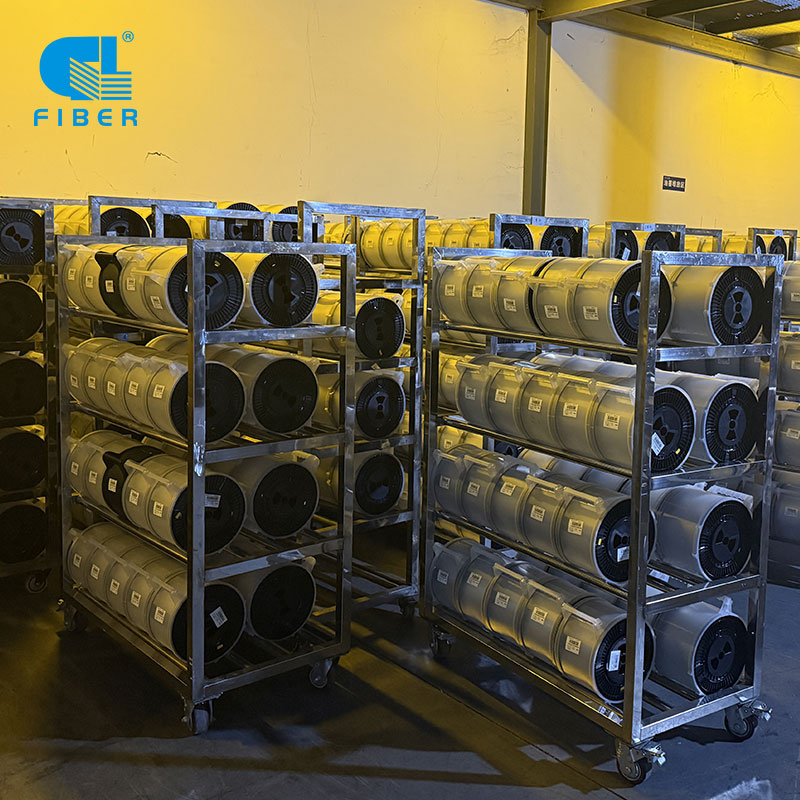
Conclusion
The G657A2 fiber shortage in China is not a temporary disruption. It is the result of two simultaneous demand shocks—AI data centers and expendable FPV drone tethers—colliding with a preform supply base that cannot expand quickly enough. For buyers of single-mode fiber in this grade, the winning strategy is not to wait for prices to fall. It is to secure qualified supply early, verify quality rigorously, and work with manufacturers who can provide consistent allocation and transparent test data.
GL FIBER supplies G657A2 bare optical fiber in 0.20mm, 0.25mm, and 0.27mm diameters for UAV FPV drone tether applications, with spool lengths from 1km to 50km. For current pricing and allocation availability, contact our team directly.