
In our interconnected world, optical fiber cable forms the backbone of global communication, powering everything from the internet to enterprise networks. But what goes into making these vital data highways? Understanding the raw materials is key to appreciating the performance, durability, and reliability of a modern fiber optic cable.
As a leading fiber cable manufacturer and a certified Chinese source factory, GL FIBER is committed to transparency and quality. This guide breaks down the core components of a fibre cable and highlights how our manufacturing excellence ensures superior products for global clients.
Core Raw Materials in a Fiber Optic Cable
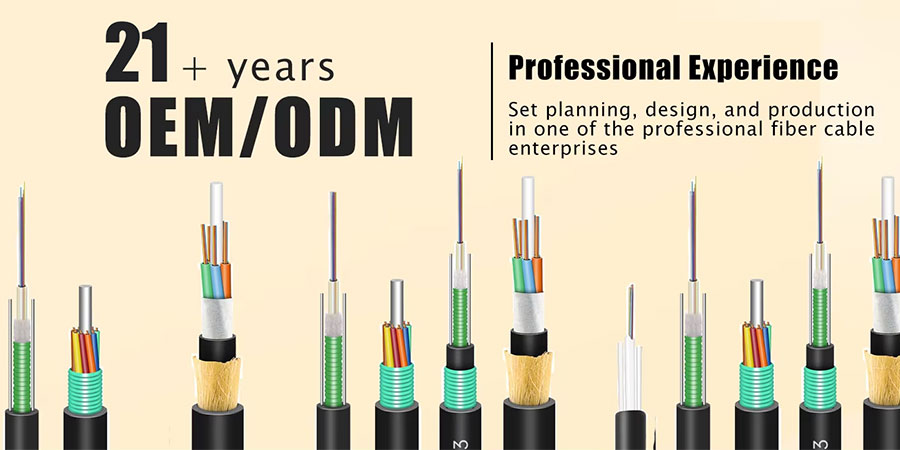
A typical optical fiber cable is a masterpiece of material science and engineering, consisting of several layered components, each with a specific function.
1. The Optical Fiber (Glass Core & Cladding)
At the heart of every cable is the optical fiber itself, which is primarily made from ultra-pure glass (silica dioxide - SiO2). This is not ordinary glass; it is exceptionally transparent, manufactured to such a high purity that it allows light to travel for kilometers with minimal signal loss.
Core: The central channel through which light pulses travel. It is doped with elements like Germanium Dioxide (GeO2) to create a higher refractive index.
Cladding: The layer surrounding the core, made of pure silica or a plastic polymer. It has a lower refractive index, trapping the light within the core through total internal reflection.
2. Protective Coatings
Immediately after the drawing process, the fragile glass fiber is coated with protective layers.
Primary Coating: A soft, UV-cured acrylate layer that cushions the fiber and protects it from microscopic bends and moisture.
Secondary Coating: A harder plastic layer, often made of nylon or another tough polymer, that provides additional mechanical strength and abrasion resistance.
3. Strength Members
To withstand installation stresses and environmental loads, fibre cables incorporate strength members.
Aramid Yarn (Kevlar®): Commonly used in tight-buffered and indoor cables, this lightweight, high-strength synthetic fiber provides crucial tensile strength.
Fiberglass Reinforced Plastic (FRP) or Steel Wires: Used in outdoor and aerial cables like ADSS cables and OPGW cables for superior rigidity and load-bearing capacity.
4. Cable Jacket and Sheathing
The outer jacket is the first line of defense. Its material is chosen based on the cable's application.
Polyethylene (PE): The standard for outdoor cables due to its excellent moisture, abrasion, and UV radiation resistance.
Polyvinyl Chloride (PVC) or Low-Smoke Zero Halogen (LSZH): Typically used for indoor and plenum cables. LSZH is preferred for safety-critical environments as it emits minimal smoke and no toxic halogens in a fire.
5. Water-Blocking Elements
For outdoor applications, preventing water ingress is critical.
Water-Swellable Tapes/Yarns: These materials expand upon contact with water, effectively blocking its propagation along the cable.
Gel Filling: A thixotropic jelly is sometimes used within the cable core, though there is a growing trend towards "dry" water-blocking systems for cleaner and easier splicing.
GL FIBER: Your Trusted Partner in Fiber Optic Solutions
Choosing a reliable fiber cable manufacturer is as important as understanding the materials. At GL FIBER, we control every aspect of production, from raw material sourcing to final testing, ensuring unmatched quality and consistency.
| Cable Type | Strength System | Tube/Filling | Water Blocking | Armoring | Special Layer | Outer Jacket |
| ADSS Cable | GFRP / Aramid | PBT + Gel | Yarn + Tape | None | Anti-tracking | HDPE/MDPE |
| OPGW Cable | ACS/AA | Stainless Tube + Grease | Grease | Multiple Wire Layers | Electrical conductor | Aluminum Alloy |
| Duct Cable (GYTA, GYTS) | FRP + Steel | PBT | Gel/Tape | CST | Aluminum tape (optional) | PE |
| Direct Burial (GYTY53, GYTA53) | FRP | PBT | Gel/Tape | Double Armored | Flooding compound | HDPE |
| FTTH Drop (GJXH) | FRP | None / Micro Tube | Dry Yarn | None | Anti-bend fiber | LSZH/PE |
| Flat Drop (GJXFH) | FRP + Aramid | None | Dry Core | Optional | Strength yarn layer | LSZH |
| Figure-8 (GYTC8S) | Steel Messenger | PBT | Gel/Tape | CST | PE-web separator | PE |
| Micro-Blown Cable | FRP + Aramid | PBT | Fully dry | None | Low-friction sheath | HDPE |
| Ribbon Cable | FRP | Ribbon Stack | Gel | Optional | Binder resin | LSZH/PE |
Why Partner with GL FIBER?
- Certified Chinese Source Factory: We are your direct link to high-quality manufacturing, backed by ISO, CE, and ANATEL certifications.
- Impressive Production Capacity: Our scale guarantees timely delivery for projects of any size, with a daily output of:
- PATCH CORD / PIGTAIL: 3,000 KM/DAY
- ADSS Cable: 1,200 KM/DAY
- OPGW Cable: 200 KM/DAY
Full Customization Support: We tailor our optical fiber cable to your exact needs, including:
- Fiber Type (Single-mode, Multimode, etc.)
- Cable Diameter & Drum Length
- Jacket Color and Material
- Custom Packaging and Logo Printing
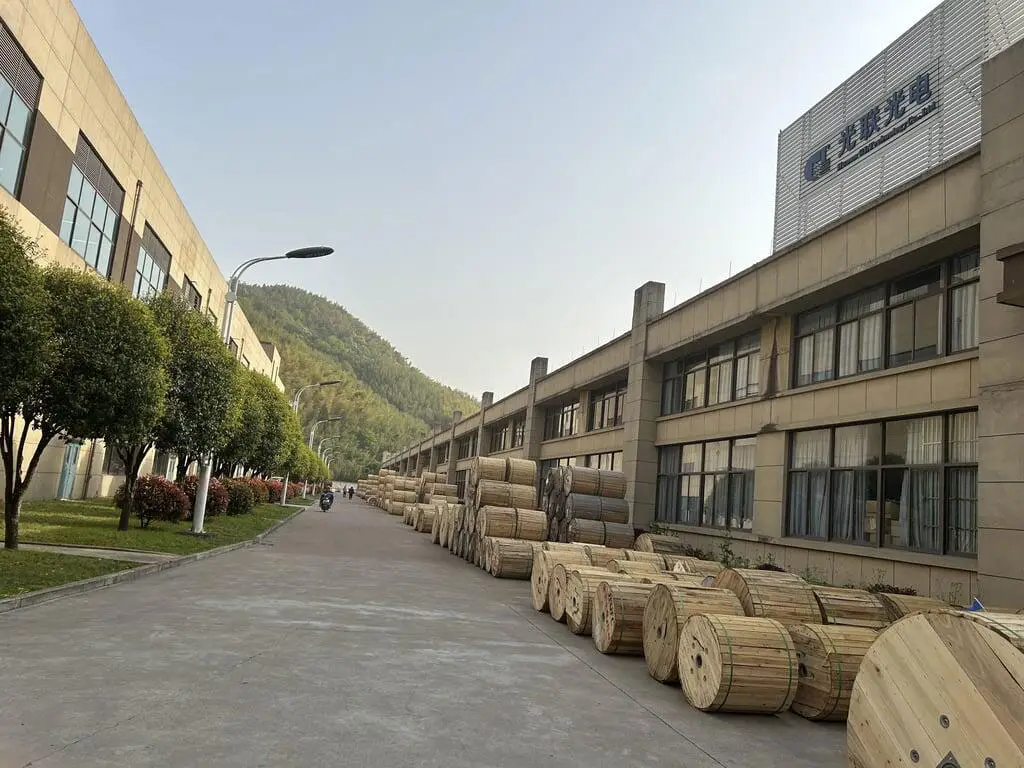
Rigorous Quality Control: We meticulously vet all raw materials and subject every batch of fiber optic cable to stringent mechanical, optical, and environmental tests.
Conclusion: Quality Materials, Superior Cables
The performance of a fibre cable is fundamentally determined by the quality of its raw materials and the precision of its construction. By partnering with a manufacturer like GL FIBER, you gain access to expertise, capacity, and a commitment to quality that ensures your network infrastructure is built on a solid foundation.
Ready to source reliable, high-performance fiber optic cables? Explore our extensive product range at https://www.gl-fiber.com/products and contact our team for a customized solution that meets your specific project requirements.