

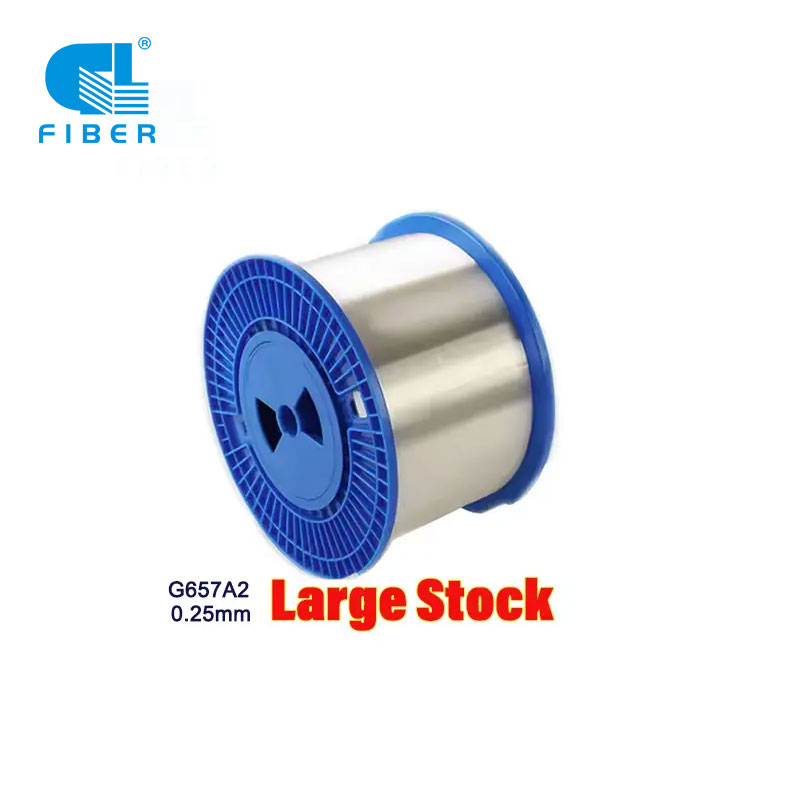
For FPV (First-Person View) drone operators, signal jamming and latency were once unavoidable nightmares. Today, a breakthrough solution is rewriting the rules: hair-thin optical fibers, unspooling silently behind drones, enable real-time control and HD video transmission—even in heavy electromagnetic warfare zones. At the heart of this revolution? Bend-insensitive G657A2 single-mode fiber.
Why Fiber Optics Became FPV Drones’ “Lifeline”?
Traditional radio-controlled drones face two critical flaws:
Signal vulnerability: Easily jammed by wide-spectrum electromagnetic interference27.
Limited bandwidth: Struggles with high-resolution video transmission for precision tasks.
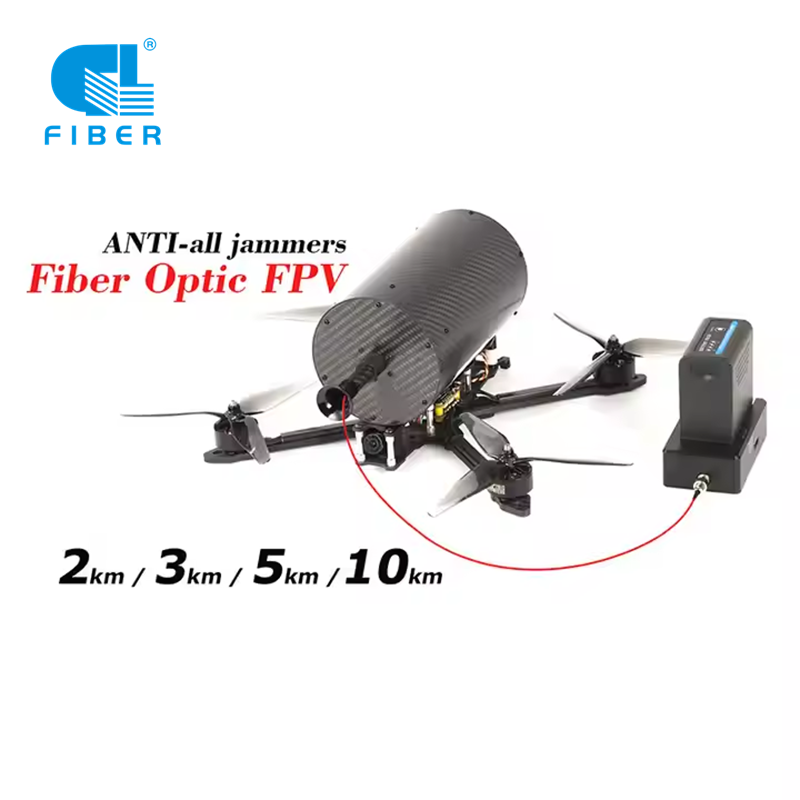
Fiber-optic-guided drones solve both. A fiber spool mounted on the drone unwinds during flight, creating a physical data highway. This delivers:
Near-zero latency control signals
Uninterrupted 4K video streaming
Immunity to radio jamming
Recent field tests confirm ranges up to 10 km—making it ideal for industrial inspections, emergency rescue, and defense operations7.
G657A2 Fiber: The Core Enabler of Drone Optic Systems
Not all fibers can endure the brutal strain of drone deployment. G657A2 single-mode fiber stands out with unique advantages:
Unmatched Bend Resistance
With a minimum bend radius of 7.5 mm, it survives tight spooling and in-flight torsion. Compare its performance:
- Bending Scenario G657A2 Loss (dB) Traditional Fiber Loss
- 1 turn at Φ7.5mm (1550nm) ≤0.2 >3.0 (unrecoverable)
- 10 turns at Φ15mm (1550nm) ≤0.03 ~1.0 16
- Full-Band Transmission (O to L-Band)
Operates across 1260–1625 nm wavelengths, ensuring compatibility with existing telecom infrastructure while supporting future upgrades.
Extreme Environment Durability
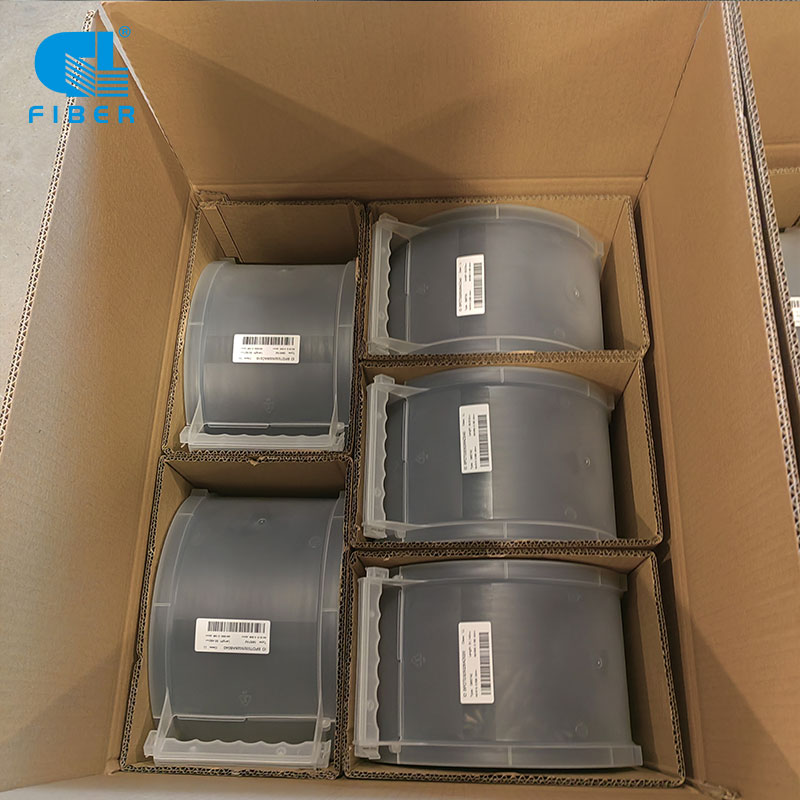
Withstands temperatures from -60°C to +85°C, resists hydrogen aging, and delivers stable attenuation ≤0.21 dB/km at 1550nm—critical for outdoor drones110.
Real-World Use Cases: Beyond Theory
Military-Grade Resilience: In conflict zones (e.g., Eastern Europe), fiber-guided drones bypass electronic warfare systems. One captured model revealed a 10-km G657A2 fiber coil, delivering precise strikes despite heavy jamming27.
Civilian Innovations:
- Power line inspections through dense forests
- Search-and-rescue in radio-dead zones (e.g., collapsed mines)
- Agricultural mapping in RF-saturated areas
Future Trends: Where Drone Fiber Optics is Headed
Smaller & Lighter: Ultra-thin 180μm coatings (vs standard 245μm) reduce spool weight by 30%, enabling longer flights4.
Smarter Spooling Systems: Auto-tension control prevents fiber breakage during sharp maneuvers.
AI Integration: Pairing low-latency fiber with edge AI for real-time object detection.
The specialty fiber market—fueled by drone demand—will reach $42.1 billion by 20253.
Why GL FIBER’s G657A2 Stands Out?
Our G657A2 Bend-Insensitive Fiber is engineered for drone optic systems:
1. ITU-T G.657.A2 compliant – Seamlessly integrates with G.652.D networks
2. 7.5 mm bend radius – Withstands aggressive spooling and deployment
3. Low PMD (≤0.2 ps/√km) – Ensures high-speed data integrity
4. Hydrogen aging-resistant – Stable attenuation in harsh environments
“Fiber control eliminates risks of signal loss or interception. It opens new possibilities for drones in electromagnetically complex scenarios.” – Defense Technology Analyst2
Conclusion: Fly Farther, See Clearer, Stay Undetected
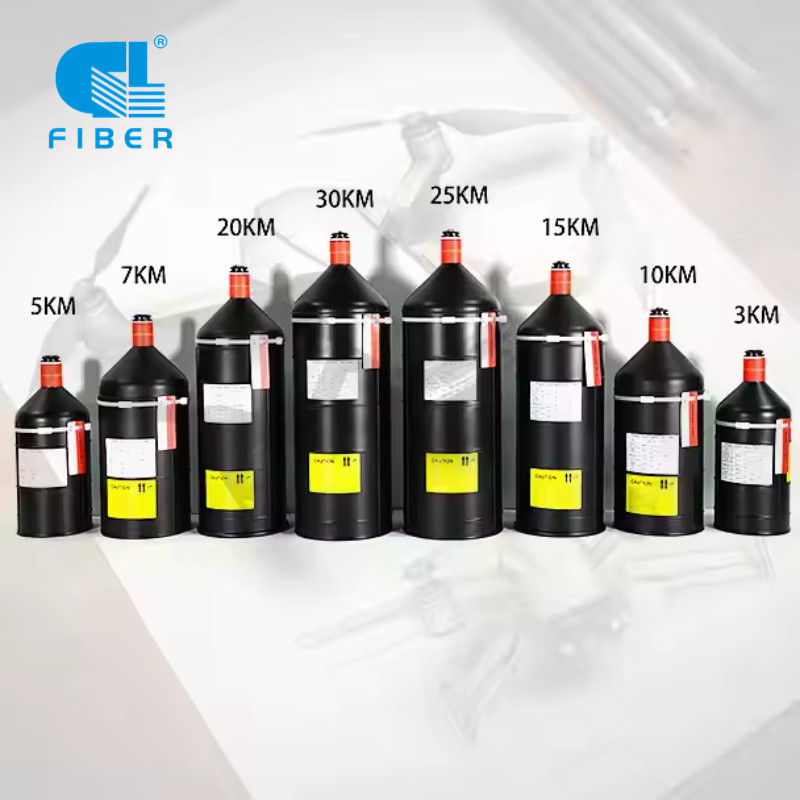
G657A2 fiber transforms drones from vulnerable radio toys to robust mission-critical tools. As industries seek reliable beyond-visual-line-of-sight (BVLOS) operations, fiber-optic guidance—powered by bend-insensitive single-mode fiber—becomes the ultimate enabler.
Ready to future-proof your drone solutions?
→ Explore GL FIBER’s G657A1/G657A2 Fiber for Unbreakable Data Links(https://www.gl-fiber.com/25-2km-50-4km-indoor-outdoor-use-sm-optic-fiber-g657a1-g657a2-glass-bare-optical-fiber.html)