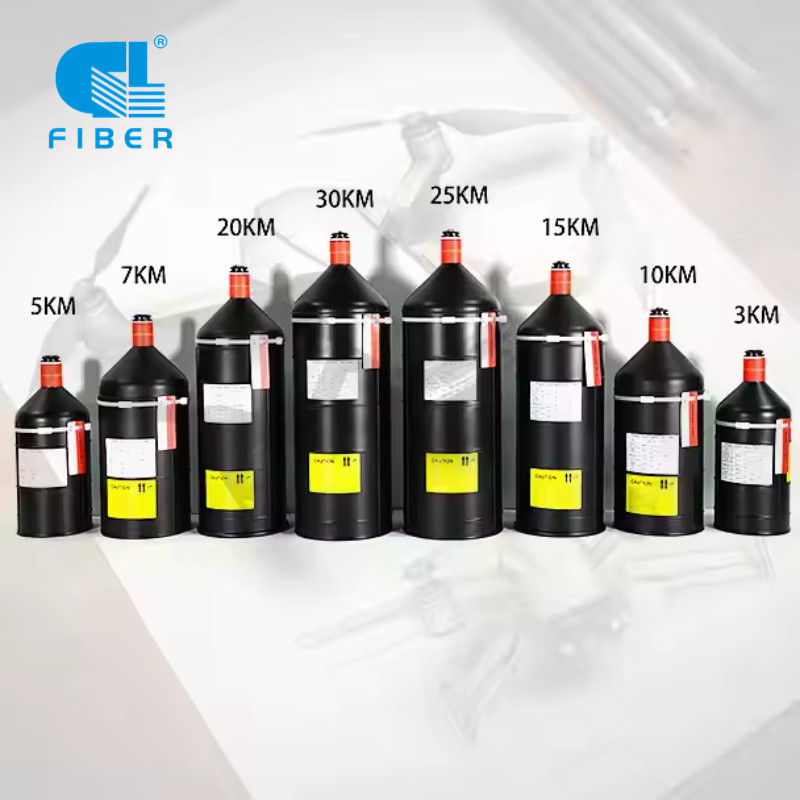

The rapid evolution of drone technology hinges on one unsung hero: optical fiber. As FPV (First-Person View) drones push boundaries in speed, range, and data intensity, conventional copper wiring or older fiber types buckle under mechanical stress and signal loss. Enter G657A2 optical fiber—a game-changer engineered for resilience and precision. Here’s why it’s becoming the backbone of next-gen drone systems.
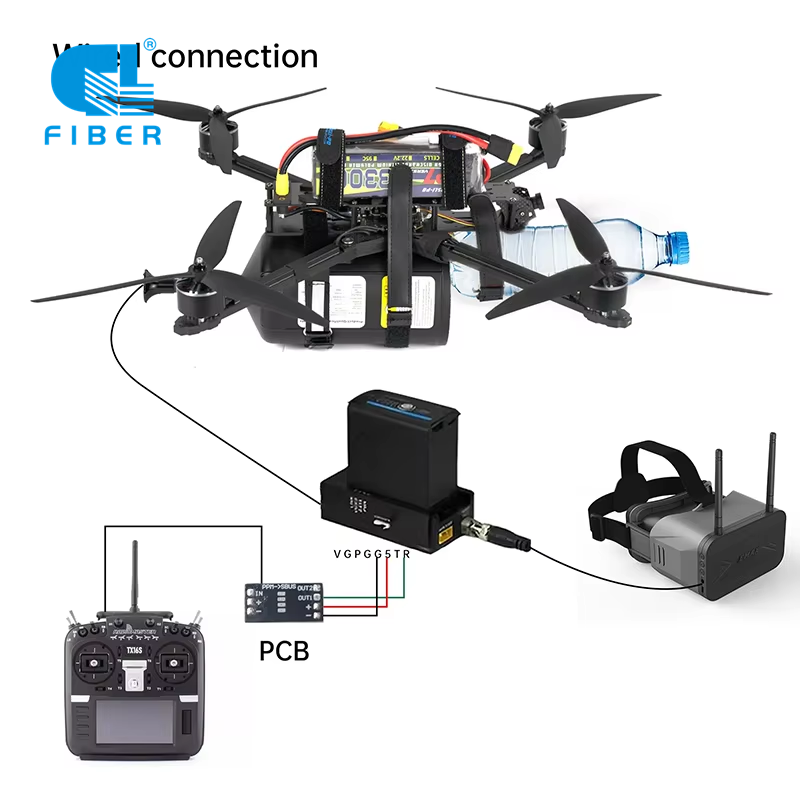
Why G657A2? The Technical Edge
G657A2 isn’t just another fiber—it’s a bend-insensitive superhero. With a minimum bend radius of just 7.5 mm, it survives tight corners and complex routing where traditional fibers fail16. This is critical for drones, where space constraints and agile maneuvers demand extreme flexibility.
Low Loss, Full Spectrum Performance: Operating across O+S+C+L bands (1260–1625 nm), G657A2 ensures seamless high-bandwidth data transmission for HD video, LiDAR, and telemetry13. Attenuation is ultra-low (≤0.21 dB/km @1550 nm), minimizing signal degradation over long distances3.
Durability Meets Lightweight Design: Weighing fractions of a gram per meter, its micro coatings (0.25mm–0.35mm) reduce payload while surviving vibration, temperature swings (-60°C to +85°C), and moisture19.
Compatibility & Future-Proofing: Fully backward-compatible with G.652D fiber, it integrates into existing infrastructure while enabling upgrades like 5G-A networks and low-altitude sensing grids35.
FPV Drones: Where G657A2 Shines
FPV racing and industrial inspection drones rely on real-time, zero-latency video. G657A2’s resistance to macro-bending eliminates pixelation or dropout during high-G turns. For example:
When coiled into compact fiber spools (25.2–60 km lengths), it enables extended-range flights beyond 50 km without signal repeaters.
Its polarization stability (PMD ≤0.2 ps/√km) ensures data integrity for navigation systems in GPS-denied environments110.
In conflict zones worldwide, this resilience has proven vital—drones using bend-insensitive fibers maintain critical surveillance and communication links despite harsh terrains and electromagnetic interference.
Market Surge: Low Altitude Economy & Defense Growth
The global specialty fiber market will hit $42.13 billion by 2025, driven by drones and "low-altitude economy" applications25. Key drivers include:
Low-Altitude Infrastructure: China’s $1.5T low-altitude initiative demands lightweight, high-reliability fibers for urban air mobility and cargo drones5.
Military-Aerospace Demand: Fiber optic cables for drones and UAVs will grow at 9.99% CAGR through 2032, with single-mode cables like G657A2 dominating long-range sensing and comms10.
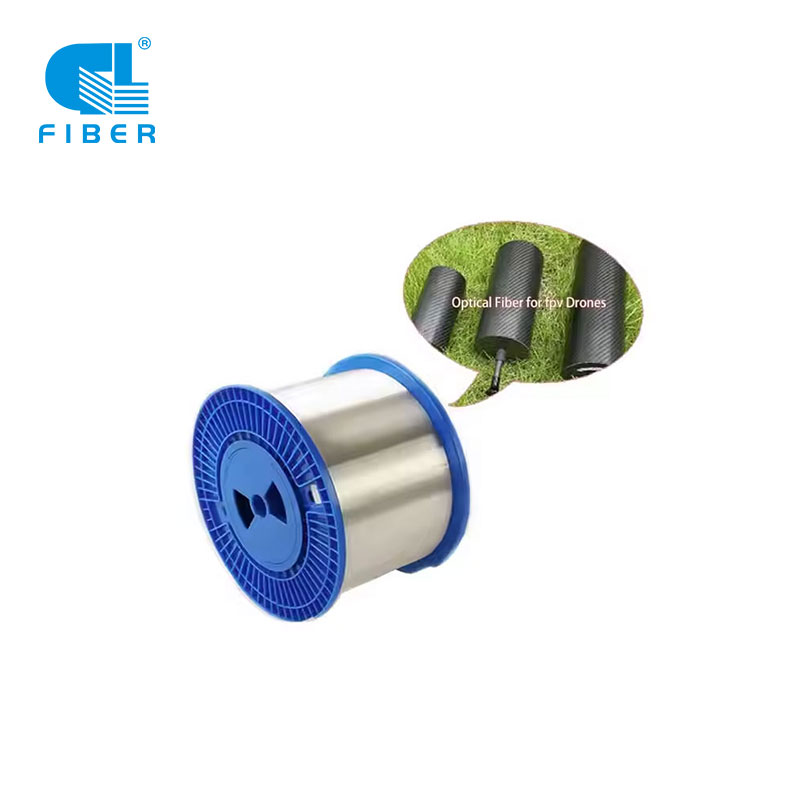
GL FIBER’s G657A2 Solution: Built for the Sky
Our 0.25mm/0.27mm/0.35mm G657A2 fibers (available in 25.2 km, 50.4 km, and 60 km spools) are tailored for FPV and industrial drones:
Space-Optimized: Micro-coatings save weight for battery/sensor payloads.
Plug-and-Play: Pre-spooled, colored fibers simplify integration into ODU (Outdoor Unit) cabling or avionics trays.
Ruggedized Performance: Tested for temperature cycling, hydrogen aging, and crush resistance per IEC 6079419.