
For decades, traditional solid-core optical fibers have been the backbone of global communications. But a paradigm shift is underway. Hollow core fiber (HCF) —with its revolutionary air-guiding waveguide structure—is breaking away from conventional transmission mediums and redefining what is possible in high-speed, low-latency optical networks.
As a world-leading supplier of communication fiber products, GL FIBER is at the forefront of this transformation, offering a comprehensive range of HCF optical fiber solutions spanning from visible light to mid-infrared wavelengths.
What Makes Hollow Core Fiber Different?
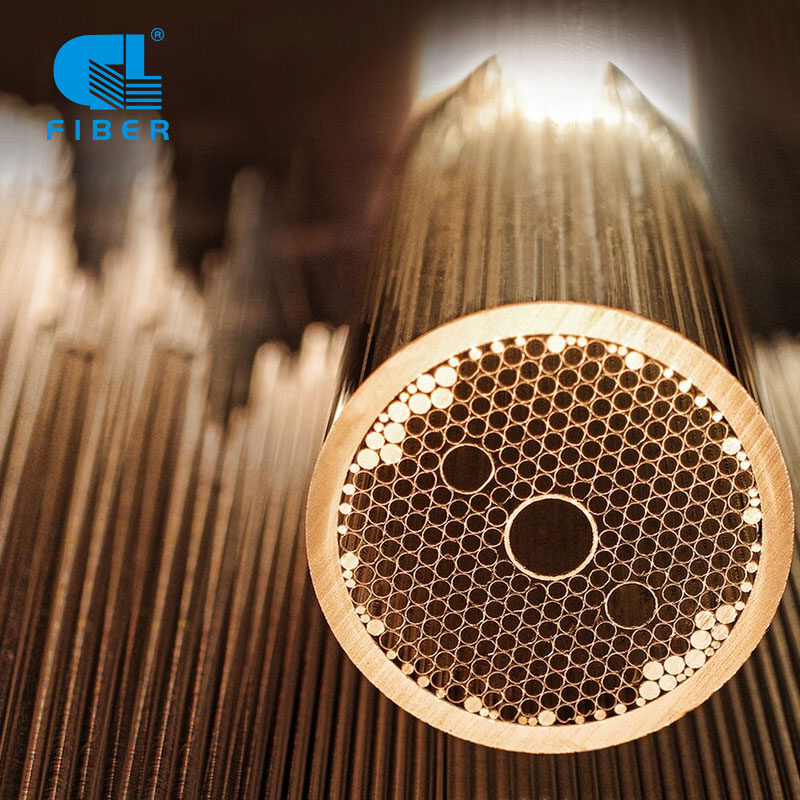
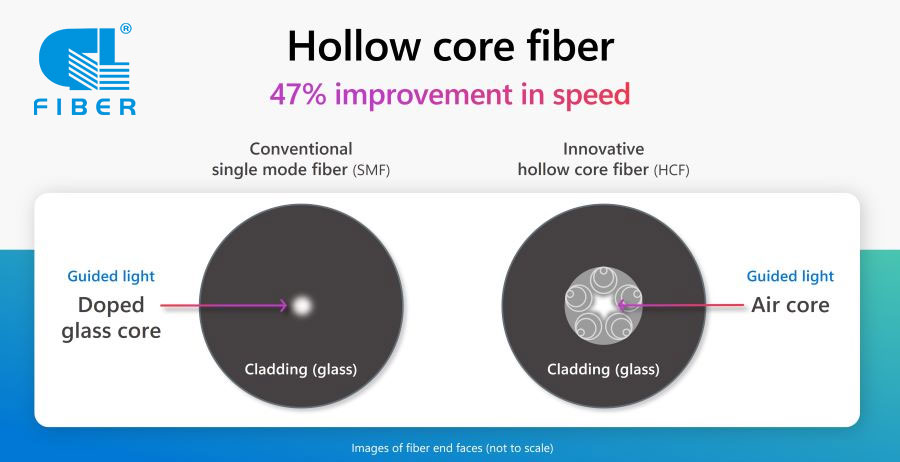
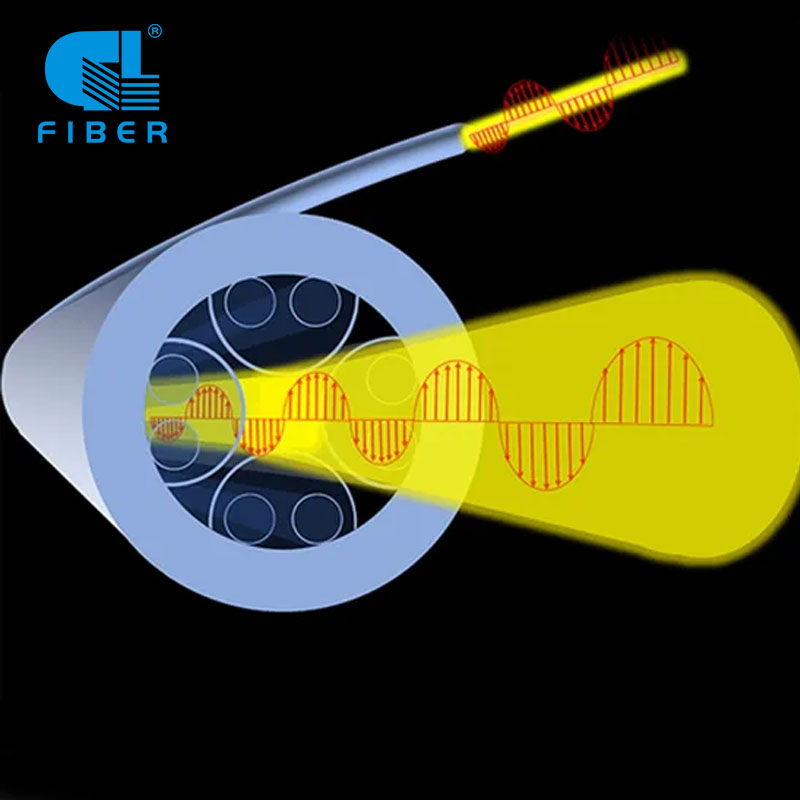
Unlike traditional solid-core fibers where light travels through glass, hollow core fibers guide light through an air-filled core. This fundamental difference unlocks extraordinary performance advantages:
- Ultra-Low Latency: Light travels approximately 31% faster in air than in glass, dramatically reducing signal delay—critical for AI data centers and high-frequency trading.
- Low Nonlinearity: The air core eliminates the nonlinear effects that plague solid-core fibers, enabling higher transmission power and cleaner signals.
- Wide Transmission Bandwidth: Supports broad wavelength ranges from visible light to mid-infrared.
- Ultra-Low Rayleigh Scattering & Dispersion: Delivers superior signal integrity over long distances.
- Higher Laser Damage Thresholds: Ideal for high-power laser transmission applications.
GL FIBER Hollow Core Fiber: Performance Parameters
GL FIBER has developed a range of hollow core fibers with internationally leading performance levels and scale production capabilities. Our HCF series includes the following variants:
Fiber Type Core Diameter Cladding Diameter Coating Diameter Transmission Window Max Attenuation
HCF-235/370-C+L 30±2 μm 235±5 μm 370±10 μm 1530-1625 nm 0.5 dB/km
HCF-235/370-O 30±2 μm 235±5 μm 370±10 μm 1260-1360 nm 0.5 dB/km
HCF-235/370-1μm 30±2 μm 235±5 μm 370±10 μm 980-1100 nm 2 dB/km
HCF-215/360-0.85μm 27±2 μm 215±5 μm 360±10 μm 800-920 nm 1.4 dB/km
HCF-325/460-2μm 40±2 μm 325±5 μm 460±10 μm 1960-2120 nm 1.4 dB/km
HCF-425/540-3μm 52±2 μm 425±5 μm 540±10 μm 2820-3100 nm 62 dB/km
Key performance highlights:
- Macro-bending loss: ≤0.1 dB (D60-100 turns)
- Mode field diameter: 21±2 μm @1550nm
- Dispersion coefficient: 3±3 ps/nm/km @1550nm
- Customizable: Wavelengths, attenuation, and delivery length can be tailored to meet specific customer requirements
Additionally, GL FIBER offers hollow core fiber adapters designed to connect hollow core fibers with single-mode fibers, featuring low insertion loss, low return loss, and modular packaging for seamless integration into existing transmission systems.
Key Application Areas
Hollow core optical fiber is ideally suited for:
- AI Data Centers & Computing Power Networks: Ultra-low latency is essential for AI training clusters and high-performance computing interconnects.
- High-Frequency Trading & Financial Networks: Every millisecond matters—HCF delivers the speed advantage.
- High-Power Laser Transmission: From industrial cutting to medical surgery, HCF handles high power without distortion.
- Quantum Transmission & Sensing: Ultra-low loss and nonlinearity make HCF ideal for quantum communications and precision sensors.
- Long-Distance & Subsea Communications: Low attenuation enables longer repeater spacing.
- Gas Sensing & Spectroscopy: The air core allows light to interact with gases for detection applications.
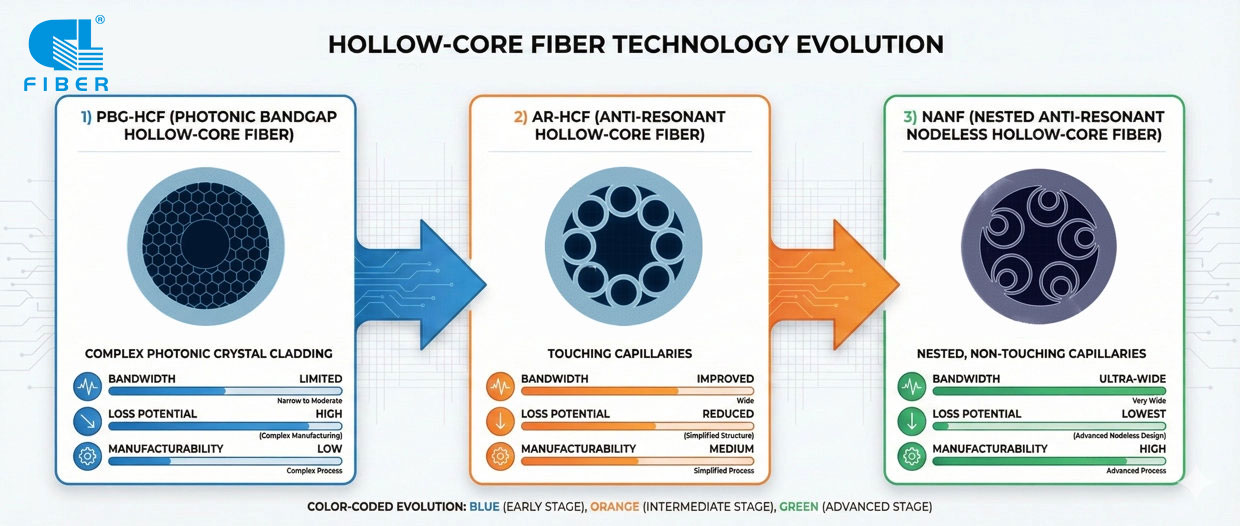
Market Outlook: The HCF Revolution Is Just Beginning
The hollow core fiber market is experiencing rapid growth, driven by AI infrastructure build-outs and the insatiable demand for lower latency:
- The global hollow-core fiber market was valued at $1.23 billion in 2025** and is projected to reach **$1.43 billion in 2026, growing at a CAGR of 16.4%.
- The Hollow-Core Fiber Backbone Network Market is expected to grow from $0.58 billion in 2025 to $3.60 billion by 2031.
- The broader Hollow Core Optical Fiber Market is projected to reach $1.66 billion by 2034, growing at a CAGR of 24.44%.
Leading industry players are already making significant moves. In June 2026, YOFC announced that it has cumulatively delivered over 10,000 core-kilometers of hollow core fiber, achieving a minimum attenuation of 0.04 dB/km and deploying over 13 commercial and pilot projects globally.
"Hollow-core fiber is emerging in fiber optic gyroscopes and precision sensors for aerospace, defense, and seismic monitoring. It is also being considered for ultra-high-speed data centers, latency-sensitive trading platforms, and long-haul communication links where signal delay directly impacts system efficiency."
However, it is important to note that hollow core fiber price currently remains high—approximately $30,000/km, which is over 300 times the price of standard G.652.D fiber. This high cost currently limits large-scale deployment to hyperscalers and carriers with mission-critical latency requirements. As manufacturing scales and technology matures, costs are expected to decrease, accelerating broader adoption.
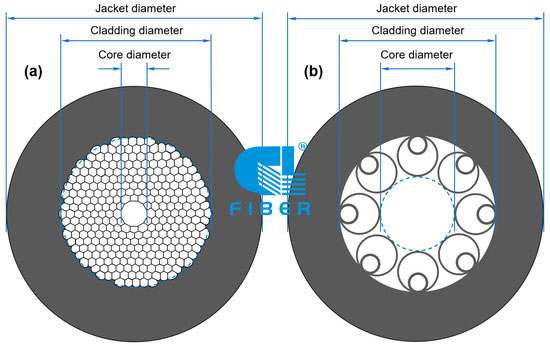
How to Evaluate Hollow Core Fiber Quality?
When sourcing hollow core fiber, consider the following:
1. Verify Attenuation Specifications
GL FIBER's HCF-235/370-C+L achieves ≤0.5 dB/km in the C+L band. Ensure your supplier provides verified test data.
2. Check Bending Performance
Low macro-bending loss (≤0.1 dB) ensures reliable performance in real-world installations.
3. Confirm Wavelength Compatibility
Ensure the fiber's transmission window matches your application—from visible light to mid-infrared.
4. Assess Adapter Compatibility
GL FIBER's hollow core fiber adapters enable seamless connection to existing single-mode fiber systems. Verify adapter performance (insertion loss, return loss) before purchase.
5. Partner with a Leader
GL FIBER leverages independently synthesized raw materials, precise capillary preparation, and cutting-edge drawing processes to achieve internationally leading performance and scale production.
Why GL FIBER?
With over two decades of experience in optical fiber manufacturing, GL FIBER is committed to advancing hollow core fiber technology:
- World-leading supplier of communication fiber products
- Comprehensive solutions—from hollow core fibers to cables and adapters
- Customization capabilities—wavelength, attenuation, and length tailored to your needs
- Scale production with internationally leading performance levels
- Rapid response and batch delivery capabilities
Conclusion
Hollow core fiber represents the next frontier in optical transmission. With its unparalleled low latency, wide bandwidth, and low nonlinearity, HCF is poised to become the backbone of next-generation AI data centers, high-frequency trading networks, and advanced sensing systems.
While the hollow core fiber price remains premium today, the technology's transformative potential is driving rapid market growth and increasing adoption. GL FIBER stands ready to support your journey into the future of optical communications.