

The global fiber optic market has entered uncharted territory. If you have sourced g652d fiber, g657a1 fiber, or g657a2 fiber in recent months, you have witnessed firsthand the most dramatic price escalation in nearly a decade. The convergence of geopolitical events, technological transformation, and structural supply constraints has created what industry analysts are calling a "perfect storm" .
At GL FIBER, with 22 years of experience as a leading Chinese source factory for single-mode optical fiber, we are operating at maximum capacity—producing 2,000 KM of G657A2 fiber daily—yet demand continues to outstrip supply. This article analyzes the current market dynamics, provides data-driven price trend analysis for G652D, G657A1, and G657A2 fibers, and offers strategic procurement advice for navigating this volatile landscape.
Part 1: The Three Drivers Reshaping Global Fiber Demand
1. The Geopolitical Factor: Russia-Ukraine Conflict and FPV Drone Demand
The ongoing Russia-Ukraine conflict has fundamentally altered the demand equation for optical fiber, particularly for g657a2 fiber. First-person view (FPV) drones equipped with fiber optic guidance systems have become essential battlefield tools, and these uncrewed systems rely on G657A2 for unjammable, real-time video transmission .
According to RBC-Ukraine, since May 2025, Russia's only optical fiber production plant—the Optic Fiber Systems facility in Saransk—has remained shut down following Ukrainian strikes . This plant previously produced approximately 4 million kilometers of fiber optics annually. Consequently, Russia has become completely dependent on fiber optic supplies from China .
The impact on pricing has been severe. Chinese suppliers have raised prices for Russian buyers by 2.5 to 4 times since the beginning of 2026 . In 2025, Russia consumed 10.5% of global fiber optic production—a dramatic increase from the historical figure of less than 1%—purchasing nearly 60 million kilometers of optical fiber .
Each drone mission can consume 20-40 kilometers of g657a2 fiber . This is not a niche application; it represents high-volume, consumable demand that simply did not exist five years ago. Beyond immediate conflict needs, military stockpiling and reserve requirements across multiple nations are adding further pressure to already strained supply chains .
2. The AI Revolution: Data Center Explosion
Simultaneously, artificial intelligence has rewritten the demand curve for optical fiber. Hyperscale AI data centers—facilities training massive language models and powering cloud AI services—consume exponentially more fiber than traditional data centers .
A single 10,000-GPU cluster requires tens of thousands of fiber kilometers for internal connections alone . According to Guotai Junan Securities, AI-driven fiber demand will grow from less than 5% of the global market in 2024 to a staggering 35% by 2027 .
This shift specifically benefits the G.657 series. Both g657a1 fiber and g657a2 fiber are preferred for data center interconnects due to their superior bending performance, which saves precious space in densely packed server racks .
The scale of investment confirms this trend. Meta recently signed a multi-year, $6 billion deal with Corning for AI data center fiber—an order roughly equivalent to Corning's entire optical communications revenue for 2025 . Major cloud providers have committed over $600 billion in combined 2026 capital expenditures, largely directed at AI infrastructure .
3. The Supply Constraint: The Preform Bottleneck
If demand explains why prices are rising, supply explains why they're rising so dramatically. The critical constraint lies upstream: optical fiber preforms.
Preforms account for approximately 70% of fiber production costs and represent the most technically challenging part of the supply chain . Expanding preform manufacturing capacity requires 18-24 months and massive capital investment .
Currently, every major global preform manufacturer operates at 100% capacity. China's top four fiber producers—including long-established manufacturers like GL FIBER—run their preform lines at full throttle, as do international manufacturers . There is simply no short-term fix.
Adding to the pressure, producing g657a2 fiber is inherently less efficient than standard G.652D. The drawing process for G657A2 requires 10-15% more production time per kilometer due to its precise geometry requirements . This means that as manufacturers shift production to meet G657A2 demand, they effectively reduce total industry output capacity—creating a self-reinforcing supply crunch .
Part 2: Data-Driven Price Trend Analysis (2025-2026)
Let's examine the hard numbers. According to recent market analysis from multiple securities firms, the price trajectory for single-mode fiber products has been nothing short of extraordinary .
G652D Fiber: The Workhorse
Period Price (RMB/km) Change
Pre-2026 (Jan) ¥18 Baseline
March 2026 ¥85–120 +650%
g652d fiber, the most widely deployed single-mode fiber for telecommunications and general infrastructure, has seen prices surge from approximately ¥18 per kilometer in early January 2026 to current levels of ¥85–120 per kilometer—a staggering increase of nearly 650% . This represents the highest price level for G.652D in seven years .
G657A1 Fiber: The Data Center Workhorse
Period Price (RMB/km) Change
Pre-2026 (Jan) ¥23 Baseline
March 2026 ¥115–135 +487%
g657a1 fiber, with its improved bending performance ideal for data center applications and FTTH deployments in space-constrained environments, has risen from ¥23 per kilometer to ¥115–135 per kilometer—a 487% increase .
G657A2 Fiber: The Premium Performer
Period Price (RMB/km) Change
Pre-2026 (Jan) ¥35 Baseline
March 2026 ¥210–230 +557%
g657a2 price has experienced the most dramatic ascent, climbing from ¥35 per kilometer to ¥210–230 per kilometer—a 557% increase . In U.S. dollar terms, g657a2 fiber now trades at approximately $32 per kilometer, a level that seemed unimaginable just months ago .
Key Observations
Magnitude and Speed: These are not typical seasonal fluctuations. The magnitude and velocity of price increases indicate fundamental structural shifts in the market .
Premium Spread: The premium for g657a2 fiber over g652d fiber has widened significantly, reflecting the technical complexity of production and concentrated demand from both AI data centers and defense applications .
Monthly Momentum: January 2026 alone saw price increases exceeding 75% for some specifications, with monthly momentum continuing at 30-40% for specialty grades .
Global Ripple Effects: The China price surge has driven the global fiber price index to 107.2—the first double-digit increase since 2021—with Chinese prices now exceeding those in Indian and European markets .
Part 3: The 2026-2027 Price Outlook
Short-Term (Q2 2026): Continued Ascent
Prices will likely climb further in coming months. Major telecom tenders are entering the market, and with manufacturers at full capacity, securing production slots requires significant premiums . The "one price per day" phenomenon—where quotes expire within 24 hours—will persist .
Multiple securities firms agree that the supply-demand mismatch cannot resolve quickly. With preform capacity maxed out and AI demand still accelerating, the price rally is expected to continue throughout 2026 .
Medium-Term (Q3–Q4 2026): High Plateau
While the rate of increase may moderate, meaningful price declines are unlikely this year. The preform bottleneck cannot resolve quickly. New production lines announced today won't come online until late 2027 at the earliest .
Long-Term (2027 and Beyond)
Analysts project that supply-demand dynamics may begin balancing in late 2027 as capacity expansions take effect . However, even after correction, prices will likely settle above pre-surge levels, reflecting structural demand increases from AI and defense applications .
The China Galaxy Securities notes that global fiber demand is projected to reach 880 million core kilometers by 2027, driven by data center requirements .
Part 4: Strategic Procurement Advice for 2026
Based on our market analysis and daily conversations with global buyers, here is data-driven advice for navigating this challenging environment:
1. Act Now—Don't Speculate on Price Drops
Waiting for prices to return to historical lows is a high-risk strategy. With AI and defense demand showing no signs of abating, current price levels may represent the "new normal" for the medium term . Securing stock now hedges against further increases.
The market has entered a phase of extreme volatility. Delaying a purchase decision by even a week can result in paying significantly more .
2. Lock in Long-Term Capacity
Spot buying is the most expensive approach in today's market. Negotiate frame contracts with reliable manufacturers to secure production capacity and buffer against daily fluctuations .
Look at how Meta secured a long-term deal with Corning; this is the strategy required to guarantee supply and potentially lock in prices . For organizations with ongoing fiber requirements, building strategic buffer inventory makes economic sense—weigh holding costs against the risks of further price increases, extended lead times, and project delays .
3. Partner with Source Factories
In shortage economies, factories prioritize direct clients. Avoid middlemen and traders who do not control their own inventory. In a supply-constrained market, they will be the first to run out of stock or inflate prices .
Working with a true source factory like GL FIBER—with 22 years of manufacturing experience and complete integration from preform to finished cable—eliminates middlemen markups and provides visibility into actual production schedules .
4. Be Flexible with Specifications
If you have critical projects, remaining flexible on secondary specifications can help secure available stock faster. This includes:
- Core diameter options
- Color coding
- Packaging requirements
- Exact length specifications
5. Budget for Continued Increases
Communicate the market reality to your end customers. The shortage will likely last for at least two years, with an estimated annual supply-demand gap nearing 100 million core kilometers . Budget accordingly and build contingencies for further price adjustments.
Part 5: The GL FIBER Advantage—Capacity When You Need It Most
In a market defined by scarcity, reliability becomes the most valuable currency. For 22 years, GL FIBER has stood as a pillar of the Chinese fiber optic industry—a true source factory with complete integration from preform to finished cable.
Our Current Production Strength
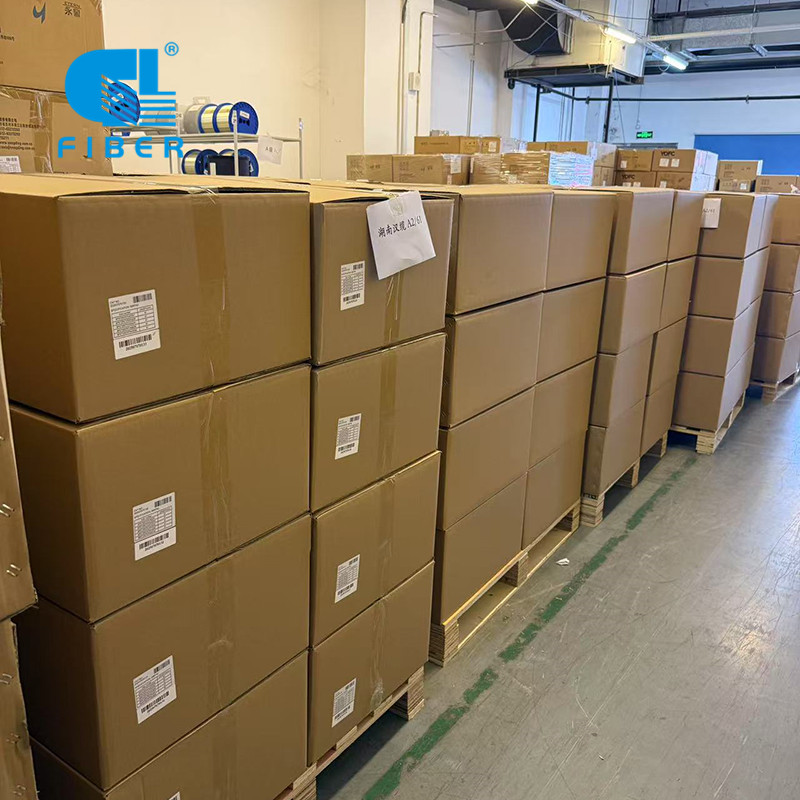
While others struggle to secure allocations, GL FIBER maintains robust production:
- Metric Capacity
- Daily G657A2 Production 2,000 KM/DAY
- Emergency Stock Limited inventory for immediate dispatch
- Rapid Delivery 100,000 km within 15 days
- Industry Experience 22 years of manufacturing excellence
- Full Customization Services
We understand that "one size fits all" doesn't work in specialized cabling. GL FIBER supports comprehensive OEM/ODM customization:
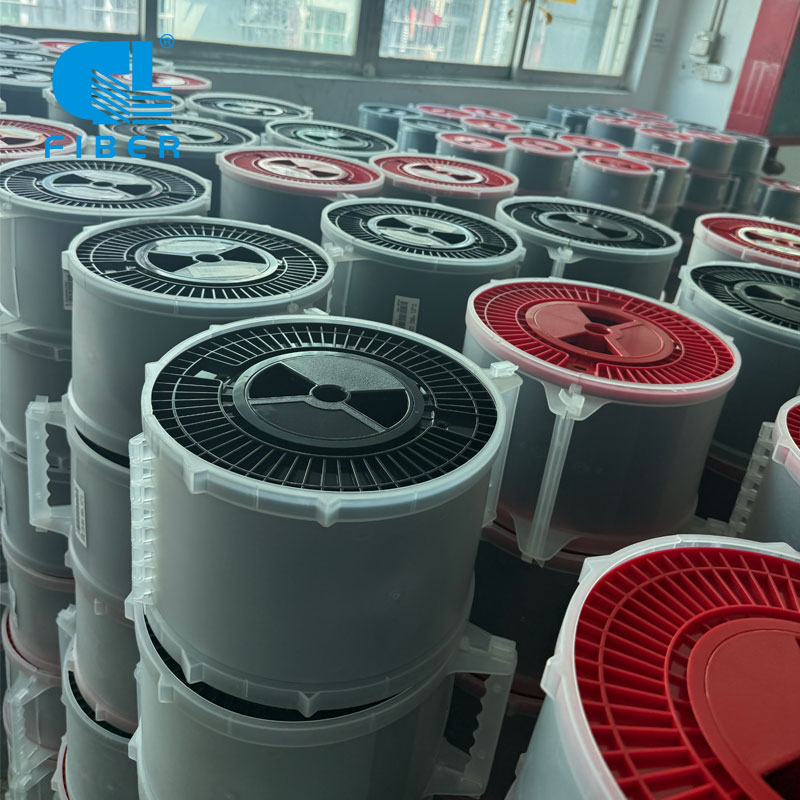
- Core Parameters: Customizable cladding diameter and coating diameter
- Packaging: Customizable reel lengths, reel materials, and outer packaging
- Branding: Private labeling with your logo and company colors
- Color Coding: Custom jacket colors for easy field identification
Our 22 years of experience mean we understand not just how to manufacture fiber, but how to deliver solutions that meet your specific project needs.
Conclusion: Navigating the New Fiber Optic Reality
The global fiber optic market has entered a historic upcycle. The convergence of AI data center build-outs, FPV drone demand from the Russia-Ukraine conflict, and structural supply constraints has created a genuine supply crunch with g657a2 price increases exceeding 550% .
For procurement professionals, this means higher costs and longer lead times. But it also means that securing a reliable, high-capacity partner is more important than ever.
With 22 years of manufacturing experience, 2,000 KM/DAY production capacity for g657a2 fiber, and limited inventory ready for immediate shipment, GL FIBER stands ready to support your projects through this challenging cycle. Our ability to deliver 100,000 km within 15 days and support full customization—from core diameter to private labeling—makes us the partner you can count on when supply is tight.
About GL FIBER
Hunan GL Technology Co., Ltd. (GL FIBER) is a premier Chinese manufacturer of optical fiber and cable products with 22 years of industry experience. As a true source factory, we maintain complete control over the production process from preform to finished cable, ensuring consistent quality and reliable supply for our global customers. Our daily production capacity for G657A2 fiber reaches 2,000 KM, and we support comprehensive customization services to meet diverse project requirements.
Contact us today for real-time availability and firm quotes.